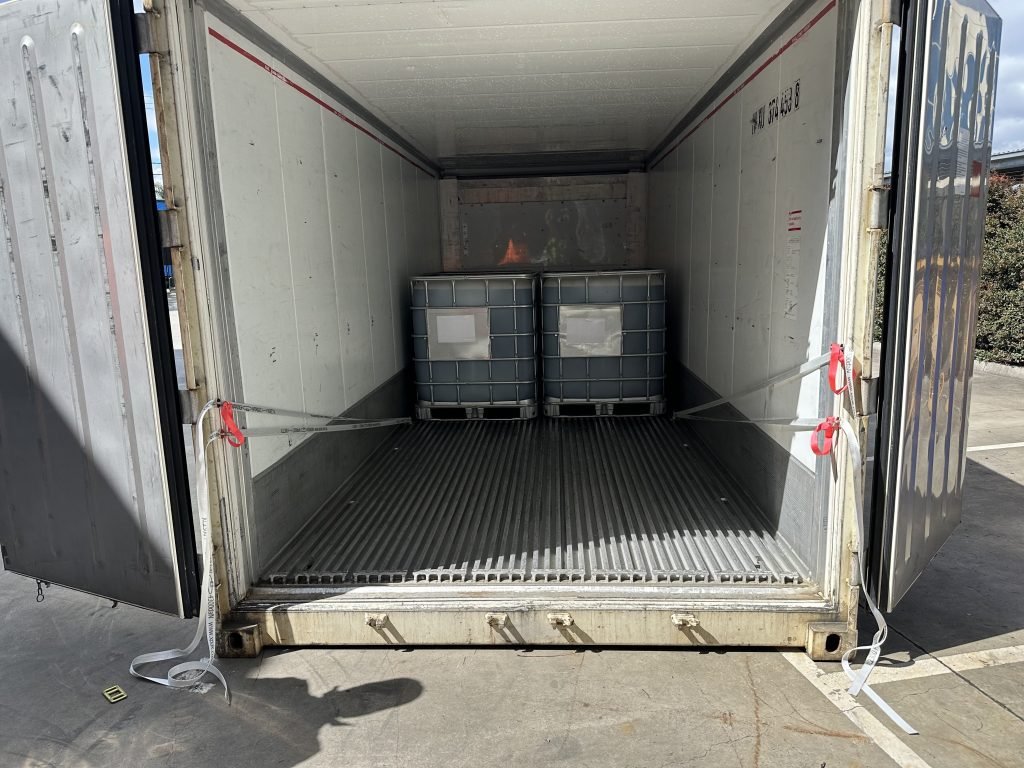

Australian transport conditions are tough. Long distances, rough regional roads, and strict Chain of Responsibility requirements mean freight needs to be both secure and easily identifiable. Load shift, tampering, and product mix-ups can not only damage freight, but also increase safety risks and quickly erode customer trust. This is especially true for an industry that consistently records some of the highest rates of serious injuries and fatalities in Australia.
This is why more and more manufacturers and exporters are turning to custom-printed strapping as part of a broader packaging and load restraint setup.
Across the country, many high-volume industries of palletised and boxed goods already rely on PET strapping, polypropylene strapping, metal strapping, rubber strapping, Xpak composite strapping, and tie-down strapping. Adding clear branding or handling instructions to these products helps protect freight, reinforce brand identity, and support Chain of Responsibility requirements. Printed tape, printed strapping rolls, and custom labels provide operators with an easy way to combine secure packaging with visible information that remains in place throughout the journey.

What Is Custom-Printed Strapping?
Custom printed strapping refers to any type of strapping, including PET, polypropylene, composite, metal, or textile, that carries printed information such as branding, safety warnings, lifting instructions, or load identification codes.
The print is applied during production to ensure it remains legible under tension and through long-haul handling.
It differs from printed tape, which is applied to the surface of a carton and used primarily for branding purposes rather than securing the load itself.
Printed strapping provides both strength and clarity. It is suitable for box strapping, webbing straps, ratchet strapping, tie-down strapping, and X-Pak Global composite strapping used in export and container freight.
What are The Key Benefits of Custom-Printed Strapping?
Stronger Brand Visibility Across the Supply Chain
Printed strapping acts like mobile signage.
Every pallet that leaves your warehouse carries the brand across trucks, depots, port facilities, and customer sites. It creates a consistent, professional look across cartons, pallet loads, and export freight.
It supports businesses that want a stronger brand presentation without changing their existing packaging process. When paired with custom labels, printed strapping helps maintain a uniform appearance across all loads.
Timberline: Branding the Load with Custom-Printed PET Strapping
Timberline uses X-Pak’s custom printed PET strapping to enhance their brand through premium presentation of their palletised products.
X-Pak supplies Timberline with branded PET strapping in their company colours so that every load is instantly recognisable on site.

As X-Pak shared in a recent campaign, this custom strapping helped to transform a standard load restraint into a marketing tool, helping their products stand out in busy yards and warehouses.
“The branded strapping gives our packaging a premium feel while making our products immediately identifiable”
– The Timberline Team
Helps Prevent Tampering and Product Theft
Unbranded strapping is easy to cut and replace without anyone noticing.
Printed strapping makes unauthorised access more obvious because any attempt to replace the strap will show mismatched print or tension inconsistencies.
Adding batch numbers, QR codes, or handling instructions provides extra traceability across the supply chain. This is particularly useful for manufacturers, construction suppliers, and exporters where load tampering and freight mix-ups can trigger costly delays.
Supports Compliance and Safer Load Management
Australian operators working under the Load Restraint Guide and Chain of Responsibility regulations need packaging that communicates weight limits and correct handling practices. Printed strapping can display:
- Weight ratings and load class
- Orientation instructions
- Security or PPE warnings
- Lifting guidance for warehouse staff and on-site teams
When applied with a strapping machine, PET strapping and polypropylene strapping provides consistent tension, which helps reduce load movement during transport. Clear instructions printed directly onto the strap help reinforce safe handling at every stage.
Works Across Multiple Strapping Materials
Each strapping type has its own role in Australian transport. Here’s how custom printing works effectively across the following:
PET strapping
- High tensile strength, making it suitable for heavy pallets and export freight.
- A strong, recyclable alternative to metal strapping (supportive of Australia’s move towards the 2025 National Packaging Targets)
- Very effective for custom printing
X-Pak strapping (composite)
- Woven polyester fibres with protective coating
- High-shock absorption, non-corrosive and safe to tension
- Excellent option for printed branding, serial numbers and load IDs on export or containerised freight.
Metal (steel) strapping
- Typically selected for extremely heavy-duty applications
- Less suited to printing due to coated or zinc-treated surfaces, most identification is by using tags or labels.
Ratchet strapping and tie-down strapping
- Essential restraints for transport loads.
- These straps can carry printed ID codes or company names for quick identification.
Polypropylene (PP) strapping
- Ideal for light to medium loads and general box strapping.
- Cost-effective for high-volume applications.
Professional Presentation
Printed strapping helps present a clean and consistent pallet presentation.
Many Australian exporters and manufacturers opt for printed PET or composite strapping for pallet loads that require a uniform appearance.
The result is a load that reflects the professionalism of the brand. Combined with accurate pallet wrapping and clear custom labels, this can be the difference between an ordinary delivery and one that makes your brand stand out.
“For a lot of our customers, custom-printed PET strapping is one of the simplest upgrades they can make. It doesn’t change their process, but it lifts their brand and makes each load easier to identify on the ground,” says Tom McHugh, Customer Business and Account Manager at X-Pak Global.
PET vs Polypropylene vs Composite: Which Material Prints Best?
Custom printing behaves differently depending on the type of strapping used. Strength, surface texture, and tensioning method all influence how well the print holds up during transport. Below is an expanded overview of each material with clearer guidance for operators.
Here’s a quick overview of PET vs Polypropylene vs Composite Strapping.
PET Strapping
PET strapping gives the best balance of strength and print clarity. The smooth polyester surface allows branding, warnings, and load information to remain clear even when the strap is tensioned over heavy pallets. It performs well outdoors and on export loads because the print does not fade easily during long-haul movements.
PET is also fully recyclable, which supports sustainability goals for manufacturers and warehouses.
Read more PET Strapping Recycling Program with X-Pak
X-Pak Composite Strapping
X-Pak Composite strapping is made from woven polyester fibres with a protective coating. It is highly shock absorbent and maintains tension well, which is important for containerised freight and export loads.
The textured surface effectively holds printed information, allowing operators to add branding, serial numbers, or load identification. Composite is safer to handle than steel and is ideal for customers who need a strong, non-corrosive strap with clear marking options.
Steel Strapping
Steel strapping is selected for extremely heavy-duty applications where strength is the primary requirement. Due to its coated or zinc-treated surface, it is not commonly used for printing. The finish makes ink adhesion unreliable and prone to wear. Operators typically add identification through tags or labels rather than direct printing.
Polypropylene (PP) Strapping
Polypropylene (PP) Strapping is a practical option for high-volume operations that need cost-effective printed strapping rolls. It works well for box strapping and securing medium-duty loads.
The material is lighter than PET, so the printed surface is more suitable for simple one-colour logos, orientation arrows, or handling instructions. It is commonly used in food processing, retail, and general manufacturing.
Comparison Table: Printing Performance by Strapping Type
| Strapping Type | Print Quality | Best Use Cases | Key Advantages |
|---|---|---|---|
| PET Strapping | Excellent clarity, maintains visibility under high tension | Heavy pallets, export loads, manufacturing, construction materials | High tensile strength, recyclable, strong print retention |
| Polypropylene (PP) Strapping | Good for simple text or single colour logos | Box strapping, light to medium loads, retail, food, and beverage | Cost-effective, easy to use with semi-automatic strapping machines |
| X-Pak Composite Strapping | Strong print stability on textured surface | Export freight, containerised loads, sensitive cargo | High shock absorption, non-corrosive, safer to handle than metal |
| Steel Strapping | Not recommended for printing | Steel products, bricks, heavy industrial loads | Extreme strength, high temperature resistance |
How Custom Printing Works (Including Offset Printing)?
Custom-printed strapping is produced by applying artwork directly to the strap during manufacturing, ensuring the print remains visible under tension and during long-haul transport.
1. Artwork and colour setup: The process starts with preparing artwork that includes logos, safety instructions, direction arrows, handling icons, or batch codes. Colours are matched to brand specifications, and a proof is supplied so customers can check spacing, sizing, and repeat patterns before production. Customers can also request a free mock-up by submitting their logo or artwork before ordering. Visualise your custom packaging here.
2. Plate creation for offset printing: For high-volume orders, offset printing is used. Printing plates are created for each colour and mounted onto the press. This method produces sharp, consistent results before final shaping. Offset printing transfers ink evenly onto the surface, helping to maintain clarity even when the strap is under tension. Integrated printing can also be used for certain materials, embedding the print more deeply into the coating to enhance its resistance to abrasion.
3. Curing and finishing: Once printed, the strap is dried or cured to fix the ink. This step prevents smudging and ensures logos and warnings stay legible when the strap is bent, tensioned, or applied using strapping machines and hand tools.
4. Winding and quality inspection: The finished strapping is wound into rolls and inspected for print consistency, colour accuracy, and repeat spacing. Operators verify alignment to ensure the print remains visible when applied to pallets or cartons.
5. Customisation options: Customers can choose brand colours, repeated text, multilingual warnings, QR codes, or handling instructions. Packaging teams can match printed strapping with custom labels and pallet wrap to create a consistent presentation across all loads.
What is the difference between surface printing vs integrated printing?
Surface printing applies the design on top of the strap, while integrated printing embeds it more deeply in the coating to resist abrasion. Lead times depend on colour choice, artwork approval, and the production run.
Customers can select brand colours, repeat patterns, safety icons, or simple text instructions.
Operational Workflow: Using Custom-Printed Strapping Correctly
Printed strapping is used the same way as standard strapping. Key steps include:
Loading Strapping into a Strapping Machine
Place the printed strapping roll onto the machine’s dispenser with the print facing outward. Feed the strap through the guides and tensioning system, checking that it runs smoothly without twisting. Keeping the printed side visible ensures clear branding and instructions once the strap is applied.
Choosing the Right Tension for PET vs PP Strapping
PET strapping is designed for higher tension and is suitable for heavy pallets or export loads. It stays stable under strong pull without losing its strength.
Polypropylene strapping performs best at moderate tension to avoid overstretching, which can reduce the clarity of the print or weaken the strap. Operators should adjust the tension settings on automatic or semi-automatic machines according to the specific material being used.
Correct Sealing
Heat sealing is used on most PET and PP strapping in automatic machines. Buckles and metal seals are suitable for manual applications or when adjustable tension is required. Ratchet tightening is applicable to tie-down strapping and webbing straps that may require repeated tightening during handling.
Why Consistent Tension Matters?
Even tension reduces pallet movement and improves load stability across road, rail, and container freight. It also keeps printed instructions aligned and easy to read.
Where Printed Strapping Works Best
Pallet wrap stations, export packing lines, and distribution centres benefit most because the same operators apply strapping repeatedly, ensuring consistent, compliant results
Australian Industries That Benefit the Most From Custom-Printed Strapping
Food and Beverage
Printed strapping helps identify batches, reduce mix-ups, and maintain presentation for high-volume pallet movements. It also supports hygiene and traceability requirements across chilled, ambient, and export products.
Construction and Building Products
Heavy materials such as timber, tiles, cement bags, and steel components benefit from visible load information and safer handling instructions. Printed PET or composite strapping also helps prevent tampering on job site deliveries.
General Manufacturing
Australian manufacturers use printed strapping to streamline pallet identification and support internal quality control. Clear branding across outbound freight helps reduce errors between production lines, warehouses, and transport partners.
E-Commerce and Retail Distribution
High-throughput operations rely on printed polypropylene strapping and printed tape to label pallets quickly, thereby reducing the number of misdirected shipments. The consistent presentation also improves the accuracy of automated sorting and dispatch.
Export and Container Freight
Printed PET and Xpak composite strapping offer strong branding and load information for containerised freight that travels long distances. The visibility helps operators and inspectors verify goods during consolidations and customs checks.
Warehousing and 3PLs
3PL facilities benefit from clear, repeatable pallet presentation across multiple client SKUs. Printed strapping supports fast cross-docking and improves stock identification during storage, picking, and dispatch.
Any Australian business that manages repeated pallet movements can benefit from clearer identification and improved presentation.
Why Choose X-Pak Global for Printed Strapping?
X-Pak supplies PET strapping, polypropylene strapping, and X-Pak composite strapping in custom printed formats. Products are tested to support safe load restraint across road, rail, and sea freight. Customers receive:
- High-quality printing that withstands long-haul conditions
- Support from a team experienced in load restraint and industrial packaging
- Strapping machines, tensioners, buckles, seals, and tools
- National distribution and reliable stocking
- Advice based on compliance requirements and product testing
See Your Branding Before You Commit
If you want to see how your logo or design will look on PET strapping, composite strapping, or other packaging, X-Pak offers free no-obligation visual mockups. Whether you’re considering strapping, wrap, boxes, or protective packaging, X-Pak’s design team will create professional visuals so you can see how your branding will appear on the finished product before you buy.