Food and beverage freight is one of the most commonly rejected load types at Australian distribution centres, with visible risks identified before the trailer door closes.
Load stability is only part of the picture. Australian distribution centres also scrutinise cold-chain integrity, food safety controls, and contamination risk. Failures in any of these areas can result in immediate rejection.
In most cases, the failure isn’t hidden. It’s visible at dispatch. Pallets that have shifted, cartons crushed by restraint, broken seals, or unclear temperature evidence are enough for a load to be deemed unsafe before unloading begins. Drivers may refuse to depart, and DCs will reject deliveries before a single pallet is touched.
This guide outlines a practical, NHVR-aligned pre-dispatch checklist specifically for food and beverage loads. It focuses on the checks that matter most at the dock, helping operators apply the right load restraint systems, meet load restraint requirements, protect cold-chain integrity, and reduce driver refusals and last-minute rebuilds.
Table of Contents:
- Why Food & Beverage Loads Get Rejected at the Dock
- 8 Reasons Why Food and Beverage Loads Are Rejected
- The Australian Compliance Framework You’re Being Assessed Against
- The NHVR Lens: Why Pre-Dispatch Checks Matter
- The X-Pak Load Restraint Checklist For Australian F&B Loads
- Truck Load Restraint Systems: What to Check (Bars, Straps, Accessories)
- Anti-Slip Mats: The Fastest Way to Reduce Pallet Movement
- Edge Protectors: Prevent Hidden Failures
- Dunnage Bags: Controlling Voids and Mixed Loads
- The Real Reasons Loads Shift in Transit
- The Australian DC Reject Risk Checklist
- Before You Close the Door: Final Compliance Check
Why Food & Beverage Loads Get Rejected at the Dock
Food and beverage deliveries are subject to strict acceptance standards. Load stability, restraint performance, cold-chain integrity, and contamination risk are all assessed before the first pallet is touched.
The Real-World Pain Points Seen Every Day
These issues show up repeatedly across Australian food and beverage industry operations:
- Loads get rejected at the distribution centre with no opportunity to unload
- Pallets needing to be restacked just to unload safely
- Drivers refusing to depart due to visible restraint or unloading risks
- Delays caused by crushed cartons or damaged packaging
- Cold-chain deliveries stopped due to missing or unclear temperature or seal evidence
Each of these outcomes points to preventable failures during loading and restraint. Not only can this be costly, but it can also increase injury risk and Chain of Responsibility exposure across the supply chain.
The Main Reasons Food & Beverage Loads Are Rejected
Food and beverage load rejections often come down to the same core issues:
- The load is not effectively restrained
Movement is possible under normal driving, braking, or cornering. - Pallets have shifted in transit
Even minor movement can make unloading unsafe - Pallet instability or poor build quality
Leaning or uneven pallets increase toppling risk - Mixed SKUs with uneven weight distribution
Different product weights compromise stability - Over-reliance on stretch wrap
Wrap contains cartons but does not restrain the load - Gaps inside the container or trailer
Voids allow freight to move during transport - Insufficient friction under pallets
Smooth decks or condensation allow pallet creep - Missing or unclear compliance evidence
Temperature, seal, or packaging issues trigger rejection.
Supermarket, beverage, and cold-chain distribution centres operate under zero-tolerance acceptance policies. Major DCs across NSW, VIC, QLD, and WA strictly adhere to the NHVR Load Restraint Guide, alongside food safety and cold-chain controls. If unloading looks unsafe, the load will not proceed.
Preventing rejection requires controls that support both load restraint performance and packaging integrity, particularly for high-risk beverage freight.
X-PAK GLOBAL CASE STUDY
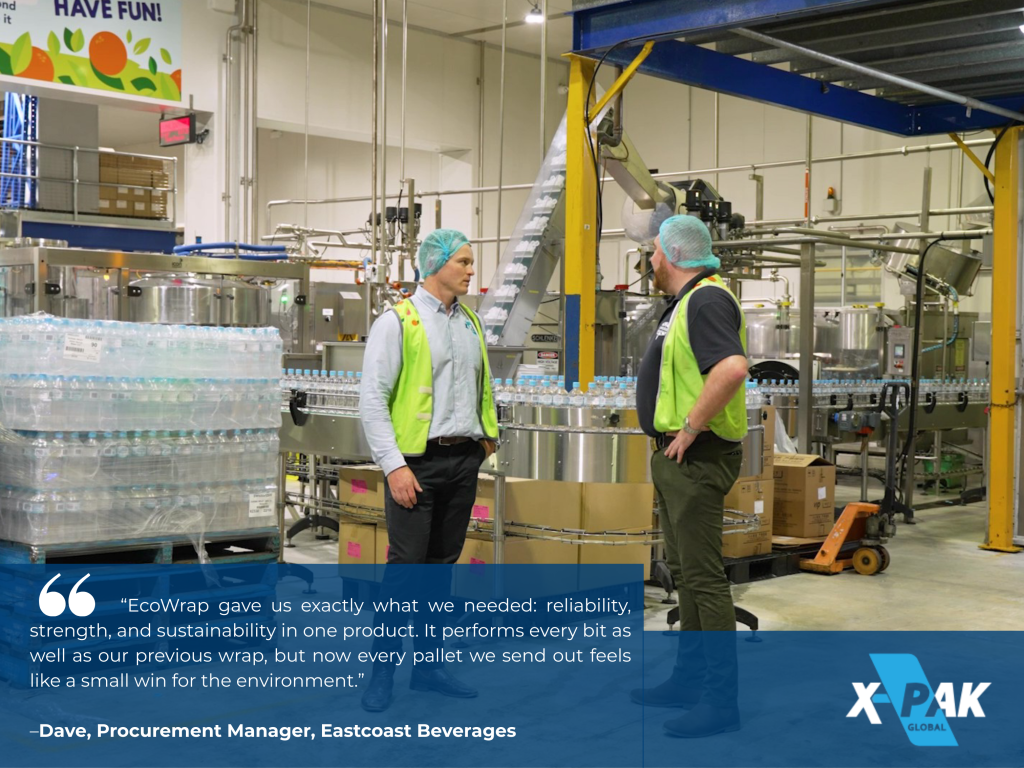
As part of X-Pak Global’s expanding eco-packaging range, EcoWrap was introduced to Eastcoast Beverages as a sustainable alternative to conventional pallet wrap that does not compromise load stability. The solution delivered the strength required for beverage pallets while reducing plastic use per load. This change supported Eastcoast Beverages’ environmental targets while maintaining day-to-day operational performance.
“EcoWrap gave us exactly what we needed: reliability, strength, and sustainability in one product. It performs every bit as well as our previous wrap, but now every pallet we send out feels like a small win for the environment.”
– Dave, Procurement Manager, Eastcoast Beverages
The Australian Compliance Framework You’re Being Assessed Against
Food and beverage loads in Australia are assessed against a nationally consistent, actively enforced compliance framework.
The NHVR Load Restraint Guide
The NHVR Load Restraint Guide sets out how loads must be restrained so they cannot move under normal driving, braking, or cornering. It is the primary reference used by regulators, distribution centres, and transport operators when determining whether a load is secure.
National Transport Commission (NTC) Load Restraint Guide
The NHVR guidance is underpinned by the National Transport Commission (NTC) Load Restraint Guide, which defines restraint principles, performance expectations, and acceptable restraint methods across different vehicle and load types.
Chain of Responsibility obligations under Australian HVNL
Together, these guides support enforcement under the Heavy Vehicle National Law (HVNL), which places Chain of Responsibility obligations on consignors, loaders, operators, and drivers to ensure loads are safe and compliant. This means that multiple parties can be exposed if risks are identified at dispatch or at the dock.
While the framework is national, enforcement reflects operating conditions:
- NSW places heavy emphasis on roadside inspections and visible restraint failures.
- QLD applies heightened scrutiny to port freight and cold-chain operations.
- WA focuses on long-haul restraint performance, where extended distances increase the risk of load movement.
These requirements apply to both heavy and light vehicles. Utes and light commercial vehicles are also required to restrain loads to prevent movement.
The NHVR Lens: Why Pre-Dispatch Checks Matter
The NHVR Load Restraint Guide 2025 and the National Load Restraint Guide require loads to be restrained so they can withstand the forces generated during normal driving, braking, and cornering.
A load that looks secure is not compliant if it can move under force. This is why visible issues at the dock – such as pallet movement, loss of tension, or unstable stacks- are treated as immediate risks.
Pre-dispatch is the most effective point to control these risks. A simple, repeatable pre-dispatch checklist aligned to NHVR expectations is the most effective way to confirm restraint performance before the vehicle leaves the site.
Load Restraint Checklist For Australian F&B Loads
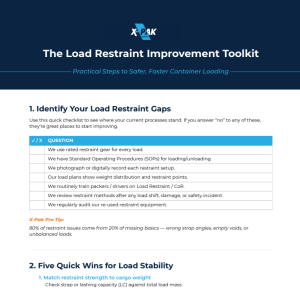
Ensure every load you dispatch is safe, stable and compliant with a practical load restraint reference developed from industry best practice. The X-Pak Load Restraint Improvement Toolkit provides a simple, quick checklist plus planning tools to help logistics and warehouse teams assess their current processes, close common gaps (like voids, load shift, and equipment ratings), and document restraint setup for Chain of Responsibility compliance. It also includes a printable load planner template to store with your shipment records and supports training, SOPs and regular audit improvements.
DOWNLOAD THE CHECKLIST
Planning the Load
Effective load restraint starts before the first pallet is loaded. The following steps help ensure the load is safe and compliant
- Understand the load
Know the load’s characteristics, including weight, dimensions, shape, stability, and any special handling or temperature requirements. - Choose a suitable vehicle for the load type and size
Confirm the vehicle’s carrying capacity is appropriate and that legal limits for height, width, length, overhang, axle mass, and gross mass will not be exceeded. - Select a restraint system suitable for the load
Select a restraint system appropriate for the load, vehicle type, and journey conditions, based on load weight, configuration, and stability. - Position the load to maintain vehicle stability, steering, and braking
Place the load to keep the centre of gravity as low and evenly distributed as possible, ensuring mass and axle limits are not exceeded. - Check vehicle structures and restraint equipment
Ensure the vehicle, anchorage points, and restraint equipment are in good condition. Repair or replace worn or damaged equipment before loading.
Loading (and Unloading) the Vehicle
- Make sure the load is stabilised
Stabilise the load to reduce the risk of movement or toppling during transport. This may include correct pallet placement, blocking, friction control, or other measures appropriate to the load type. - Follow safe loading and unloading practices
Plan the loading process, train staff, establish clear loading zones, and communicate effectively to manage risks and protect people on site. - Use sufficient restraint to keep everyone safe
Apply enough restraint to meet the required performance standards and ensure the load cannot move under expected driving conditions.
Driving According to the Load and Conditions
- Allow for changes in vehicle handling
Be aware that a loaded vehicle will handle differently to an unloaded one. Adjust driving behaviour to account for changes in stability, braking distance, height, and width. - Check the load and restraints during the journey
Stop periodically to inspect the load and restraint systems. Loads can settle or shift during transport, and restraints may require re-tensioning.
Truck Load Restraint Systems: What to Check (Bars, Straps, Accessories)
Effective truck load restraint depends on selecting the right system and using it correctly.
- Ratchet straps must be correctly tensioned, attached to rated anchor points, and applied in sufficient numbers based on load weight and layout. Strap angles should be set to restrain movement rather than hold loads down.
- Pro-Pole tools allow safer placement of bars and curtains without climbing or overreaching.
- Curtains are not a primary restraint unless specifically rated and supported.
In many cases, mixed systems provide the most reliable outcomes.
Supporting Controls That Improve Load Restraint Performance
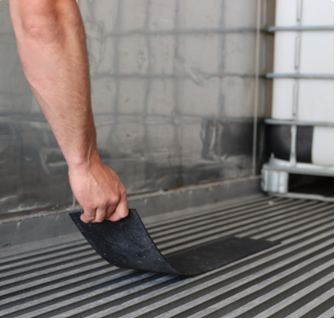
Anti-Slip Mats: The Fastest Way to Reduce Pallet Movement
Is there adequate friction control under the pallets?
Many Australian trailers have smooth aluminium or steel decks. In refrigerated trailers, condensation can further reduce friction. Under braking and cornering, these low-friction surfaces allow pallets to creep.
Anti-slip mats increase friction between the pallet and the deck, helping reduce pallet movement under driving conditions. They are especially critical for smooth trailer floors, refrigerated trailers, and stretch-wrapped food or beverage pallets.
Anti-slip mats do not replace load restraints, but they are among the quickest, lowest-cost ways to support your restraint systems and improve performance.
Edge Protectors: Prevent Hidden Failures
Is any strap making direct contact with cartons or shrink wrap?
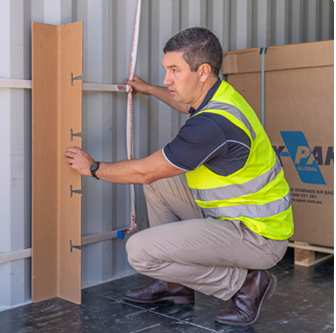
Edge protectors are often overlooked, but they play an important role in maintaining restraint performance throughout a journey. When straps bear directly on cartons or shrink wrap, the packaging or goods can be damaged.
Australian DCs frequently reject loads with crushed cartons or damaged packaging. Edge protectors help prevent strap damage, maintain equal tension throughout the journey, and present clear visual compliance on arrival.
Dunnage Bags: Controlling Voids and Mixed Loads
Are there gaps that allow freight to move?
Mixed SKUs, partial pallets, and uneven pallet footprints are common in food and beverage freight. When gaps are left inside the trailer, loads can move.
Dunnage bags are inflatable air cushions used to fill gaps between pallets or load faces. Once inflated, they fill empty spaces and apply outward pressure, helping prevent freight from shifting during transport.
They support restraint systems but do not replace them. Under Australian guidelines, restraint must still prevent movement in all directions.
Dunnage bags are critical for food and beverage manufacturers to protect palletised goods.
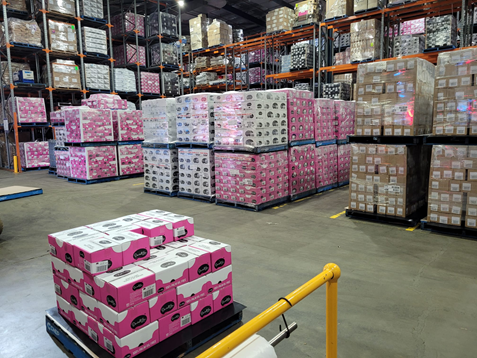
To see how they work in action, learn how Darrell Lea used X-Pak dunnage bags to protect their premium food products.
The Real Reasons Loads Shift in Transit
Loads rarely shift because of one mistake. It’s usually a combination of:
- Poorly built or unstable pallets
- Mixed SKUs with uneven weight distribution
- Pallet wrap that contains cartons but not the load
- Over-reliance on a wrap instead of a restraint
- No friction control under pallets
- Gaps left in the load “to save time.”
Australian road conditions, long braking zones, and extended interstate transit magnify these weaknesses. Thus, the 10-step load-restraint checklist applies.
The Australian Customer Reject Risk Checklist
Before dispatch, it pays to think like the receiver. Loads are commonly rejected when DC staff see:
- Leaning or visibly unstable pallets
- Cartons crushed or damaged by straps
- Pallet movement when trailer doors open
- Gaps between pallet rows
- Broken or loose pallet wrap
- No visible restraint system
- Missing temperature records or load evidence
If unloading looks unsafe, rejection is likely.
Read more: 7 Load Restraint Principles You Should Always Apply
Before You Close the Door: Final Compliance Check
The final check before departure is often the difference between a load being accepted or rejected.
A simple walk-around and push test can help confirm whether a load is stable and ready for transport. A load that cannot pass a pre-dispatch check will not pass an inspection.
Before sealing the trailer, take one last moment to:
- Visually check restraint systems
- Confirm pallets are stable and immobile
- Ensure no gaps, damage, or compromised packaging
- Verify temperature and load evidence is complete where required
Correct load-restraint training, documented checks, and the right systems help businesses meet Australian load requirements and protect everyone in the supply chain.
X-Pak Global supports Australian transport and logistics operations with practical, compliant load restraint solutions aligned to NHVR and HVNL requirements. Our team provides site-specific guidance to help food and beverage loads perform safely in real-world driving conditions, reducing the risk of rejection before departure.