The Myth of “Set and Forget” in Cold Chain Transport
Booking a reefer container doesn’t automatically guarantee product integrity.
Across Australia’s freight network, cold chain transport is becoming more regulated and scrutinised than ever. Fresh produce, seafood, dairy, pharmaceuticals, and export goods move daily under strict compliance requirements aligned with the Food Standards Australia New Zealand (FSANZ) and the Therapeutic Goods Administration (TGA).
On paper, it sounds simple: set the temperature, seal the doors, and let the refrigerated system do its job. In reality, cold chain logistics involve many fragile systems. A single lapse during loading, transit, or unpacking can compromise an entire shipment.
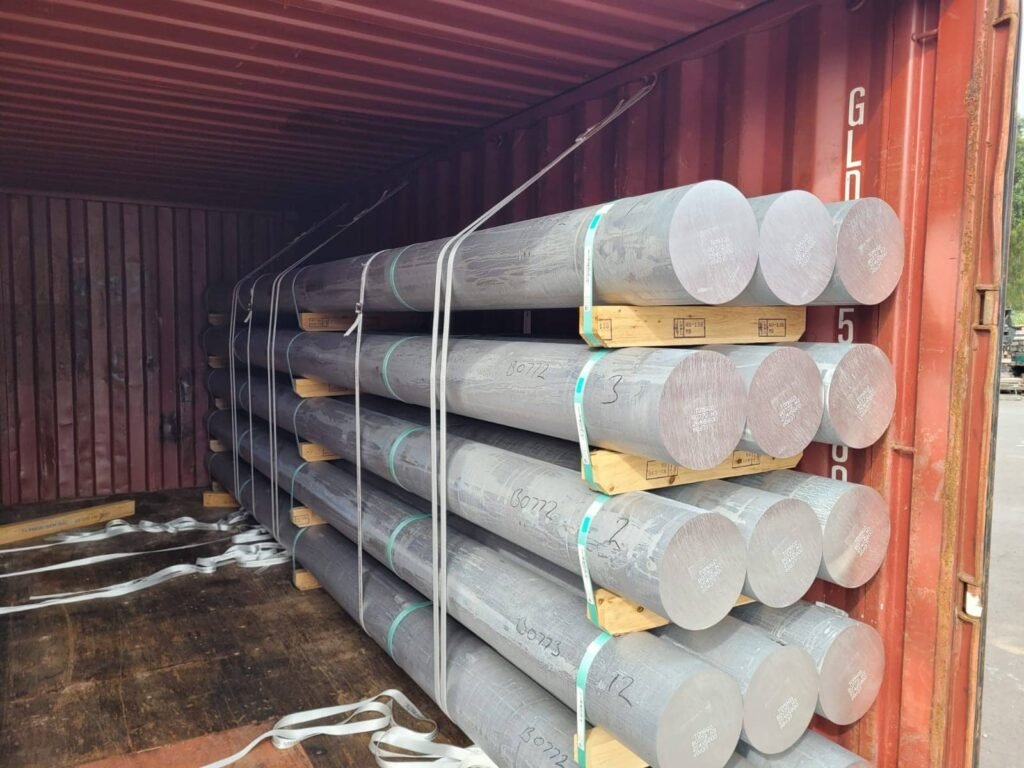
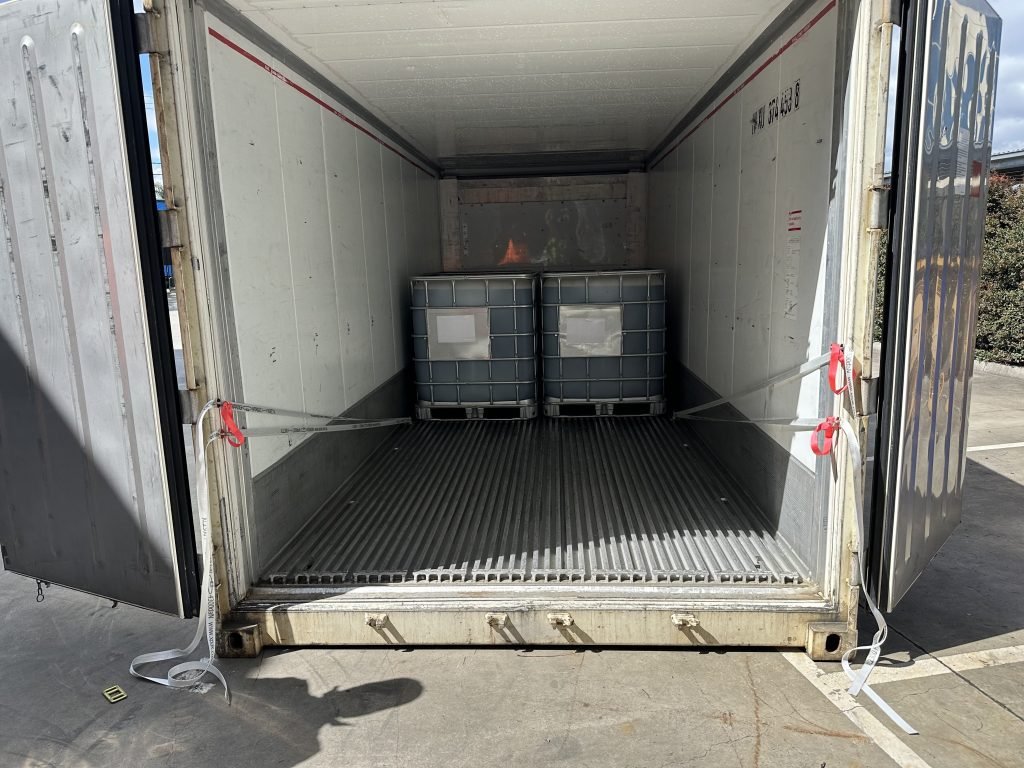
Effective load restraint relies on a complete system. This includes correctly engineered lashing systems to secure the cargo, properly placed dunnage bags to eliminate voids and prevent pallet movement, and desiccant solutions to control internal humidity. Without these elements working together, even well-packed shipments can experience load shift, compromised product integrity, and avoidable freight damage.
Even well-managed reefer shipments experience temperature deviations. Airflow pathways can be obstructed. Cargo can shift during transit. Doors left open too long at distribution points can introduce external heat. And equipment can fail without warning.
This blog explores where cold chain transport failures typically occur, the operational and compliance consequences, and how engineered restraint systems and fit-for-purpose refrigerated container design – such as X-Pak Global’s refrigerated container solutions, which help support more stable temperature performance.
What is a Reefer Container?
A reefer container (short for refrigerated container) is an insulated shipping container fitted with an integrated refrigeration unit. It is designed to transport temperature-sensitive goods by controlling internal air temperature, circulating cooled air, maintaining chilled or frozen setpoints, and recording temperature data during transit. A reefer container is not like your household fridge that simply cools whatever is inside it. Instead, it is designed to maintain a set temperature rather than cool warm products. This means that strict pre-cooling, loading, airflow, and handling procedures must be followed to ensure correct operation.
Click the section to read:
- The Myth of “Set and Forget” in Cold Chain Transport
- What is a Reefer Container?
- What Is a Break in the Cold Chain?
- Where Cold Chain Failures Typically Occur
- Why Cold Chain Integrity Matters
- What Are the Consequences of Breaking the Cold Chain in the Transport Sector?
- What Should Be Checked in the Cold Chain?
- Load Restraint and Moisture Control: The Often Overlooked Variables
- How to Prevent a Break in the Cold Chain When Transporting Goods
- How to Prevent Cold Chain Disruptions in the Food Industry
- Choose X-Pak Global for Food Delivery Without Disruptions
What Is a Break in the Cold Chain?
A break in the cold chain occurs when temperature-sensitive goods move outside their required temperature range at any point during storage, transport, or delivery.
Breaks can be sudden, a power interruption or mechanical failure, or they could occur gradually, caused by poor packing or insulation practices. Either way, even short-term exposure outside the approved range can reduce shelf life, affect safety, and create compliance risks.
Common causes include:
- Pallets waiting on a loading dock in ambient conditions
- Loading goods that were not pre-cooled to the required setpoint
- Blocked return air vents are restricting airflow
- Overloading vehicles results in limited air circulation
- Cargo shift due to inadequate restraint
- Power interruption during transit or intermodal transfer
- Extended door openings during inspections or unloading
- Inadequate insulation during cross-docking transfers
Even short temperature excursions during multi-stop routes can compromise product safety and shelf life. Effective cold chain logistics in food delivery depends on disciplined procedures, reliable equipment, and continuous monitoring, not just refrigeration alone.
Where Cold Chain Failures Typically Occur
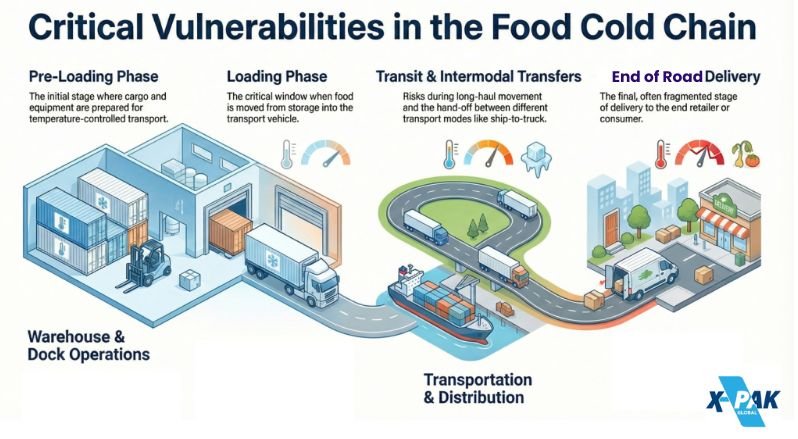
Cold chain failures rarely occur in a single dramatic moment. More often, breakdowns occur at predictable pressure points across the journey. Understanding where those are can help businesses prevent costly temperature failures.
1. Pre-Loading Phase
This is where risk often begins – before the container doors close. Reefer units are engineered to maintain temperature, not to cool warm cargo. So the product must be pre-cooled. Warm warehouse staging areas and delays before container sealing further expose goods to temperature rise before transit even begins.
2. Loading Phase
Improper cargo configuration is a major vulnerability. Incorrect stacking can block airflow circulation, while ignoring ventilation settings reduces temperature uniformity. Poor lashing results in cargo shifting during braking, acceleration, or vibration. When pallets move, airflow channels collapse, and return air vents may become obstructed, leading to uneven temperature zones or even damaged products. Installing purpose-built reefer lashing points enables secure restraint without compromising container walls or airflow design.
Inflatable dunnage bags should be used to eliminate any void space between pallets. Without void control, cargo movement increases, altering airflow circulation and increasing temperature variability inside the container.
3. Transit Phase
During transport, temperature stability depends on mechanical performance and operational discipline. Equipment faults, unnecessary door openings, or power interruptions during transit can introduce instability, especially over long distances.
Moisture build-up during temperature fluctuations can also create risk. As warm air enters the container during loading or inspections, condensation may form inside. Container desiccants play a critical role in absorbing excess humidity and reducing the risk of “container rain,” which can damage packaging, labels, and cartons, particularly in food export shipments.
4. Intermodal Transfers
Switching between a reefer truck and a reefer container – such as during port or rail transfer – increases exposure risk to power changeovers and handling delays. Port congestion and inconsistent temperature can compromise otherwise stable shipments.
5. End of Road Delivery
Delays in unloading or improper final storage conditions frequently cause final-stage temperature abuse, a common real-world weakness in cold chain logistics.
Why Cold Chain Integrity Matters
Maintaining cold chain integrity is critical for any business handling temperature-sensitive cargo.
When cold chain transport is properly managed, it helps protect:
- Food safety – preventing bacterial growth and contamination
- Product quality – maintaining freshness, texture, and nutritional value
- Regulatory compliance – meeting Australian food safety and pharmaceutical transport standards
- Brand protection – avoiding recalls, rejected shipments, and reputational damage.
Temperature-controlled supply chains typically involve dairy, meat, seafood, frozen goods, fresh produce, vaccines, pharmaceuticals, and other sensitive products. In each case, temperature must be controlled to meet safety standards, remain compliant, and retain product value.
Refrigerated vehicles and monitored cold chain logistics systems are designed to maintain strict temperature ranges, but equipment alone isn’t enough. Proper loading directly impacts airflow and stability inside a reefer container. Incorrect pallet placement can block return air vents, while unsecured cargo can shift, restricting circulation.
Using correct restraint systems that secure cargo without obstructing airflow, including purpose-built reefer lashing points and compatible container lashing systems, helps support consistent load control throughout transport. In export and long-haul shipments, integrating dunnage bags to prevent pallet shift and desiccant solutions to manage humidity further strengthens overall stability.
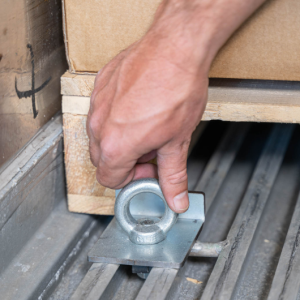
X-Pak Reefer Lashing Point
Temperature-sensitive goods commonly include:
- Dairy, seafood, and meat – Milk, yoghurt, cheese, butter, fresh fish fillets, prawns, oysters, beef cuts, lamb, and poultry products
- Frozen products – Frozen vegetables, frozen berries, ice cream, frozen ready meals, frozen seafood, and frozen bakery items
- Fresh produce – Leafy greens, berries, apples, citrus fruits, tomatoes, avocados, herbs, and pre-cut salad mixes
- Pharmaceuticals and medical supplies – Vaccines, insulin, biologics, blood products, injectable medications, temperature-sensitive diagnostic kits, and certain medical reagents
What Are the Consequences of Breaking the Cold Chain in the Transport Sector?
A. Health Risks
Breaking the cold chain can create conditions that allow bacterial growth in perishable food, increasing the risk of foodborne illness. Exposure outside safe temperature ranges may accelerate pathogen multiplication, particularly in high-risk products like dairy, seafood, and meat.
Where temperature control cannot be verified, affected goods may require disposal or investigation. This causes operational disruption and potential regulatory scrutiny, particularly for supply chains serving hospitals, aged care facilities, or other vulnerable populations.
B. Economic Risks
Breaking the cold chain can lead to product spoilage and costly write-offs. Shipments may be rejected at destination ports, triggering insurance disputes and contract penalties.
Beyond immediate losses, businesses may face increased scrutiny from regulators and commercial partners. Reputational damage, delays, and documentation requirements can create additional costs beyond the product’s value alone.
What Should Be Checked in the Cold Chain?
Effective cold chain management relies on consistent verification at every stage of transport, not assumption. Temperature stability must be confirmed before dispatch and monitored throughout transit.
Key control points include:
Pre-Cooling and Setpoints
- Confirm the reefer unit is pre-cooled to the correct setpoint
- Ensure cargo is pre-chilled before loading
- Verify temperature calibration and control settings
Airflow and Load Configuration
- Clear airflow circulation pathways to prevent hotspots
- Avoid overloading or obstructing ventilation channels
- Secure cargo using airflow-compatible restraint systems, including purpose-designed reefer lashing points
- Use thermal pallet covers during staging or intermodal transfer to reduce ambient exposure without restricting airflow
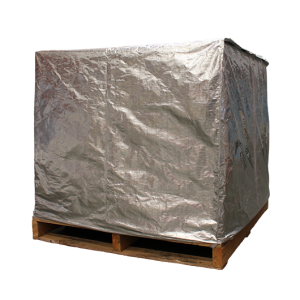
Australian-made thermal pallet covers
Void Management and Stability
- Confirm dunnage bags are correctly positioned and inflated to prevent pallet movement
- Check lashing tension and anchor integrity Calculate and install appropriate desiccant quantities based on voyage duration and humidity exposure
Container Integrity
- Inspect door seals and structural condition
- Confirm insulation performance is intact
Monitoring and Traceability
- Implement temperature monitoring systems during transit
- Maintain data logs for compliance and audit purposes
Power and Mechanical Reliability
- Ensure adequate fuel supply for refrigerated vehicles
- Confirm stable power connection during intermodal transfers
Cold chain performance depends on these controls being applied consistently, before, during, and after every shipment.
Load Restraint and Moisture Control: The Often Overlooked Variables
Many cold chain failures are incorrectly attributed solely to refrigeration performance. In reality, unstable cargo and unmanaged humidity are frequent contributors to cargo degradation.
Container lashing systems maintain structural stability during transit. Dunnage bags eliminate void space that allows pallets to shift. Desiccants control internal moisture levels and reduce the risk of condensation.
Cold chain logistics is not just about temperature control; it is also about movement and moisture control.
How to Prevent a Break in the Cold Chain When Transporting Goods
Preventing a break in the cold chain requires planning, discipline, and the right equipment. Cold chain transport is not self-managing. It depends on structured systems that protect temperature stability from origin to destination.
Plan Efficient and Reliable Routes
Strong route planning reduces exposure risk.
- Use predictive logistics software to anticipate delays
- Avoid congestion zones where possible
- Optimise transit time to minimise door openings
- Ensure backup plans are in place for breakdowns or diversions
Reducing time-in-transit lowers the chance of temperature excursions.
Use the Right Equipment
Reliable equipment underpins effective cold chain logistics.
- Invest in modern reefer container units
- Maintain refrigerated vehicles and equipment to manufacturer standards
- Use airflow-compatible load restraint systems
Refrigerated container solutions designed with integrated lashing systems and structural durability, such as those provided by X-Pak Global, support stability and secure cargo loads throughout transit.
Proper Packaging & Loading
Correct loading protects airflow and stability.
- Use thermal pallet covers during staging
- Maintain clear airflow channels
- Secure cargo using reefer lashing points
- Avoid mixing products with incompatible temperature requirements unless validated
Effective cold chain management is proactive, not reactive.
How to Prevent Cold Chain Disruptions in the Food Industry
Preventing disruptions in the food industry requires proactive cold chain management at every operational level.
- Staff training in cold chain management ensures employees understand temperature requirements, correct loading techniques, and the risks of improper handling. Human error remains one of the most common failure points.
- Standard operating procedures (SOPs) create consistency. Clear guidelines for loading, monitoring, and delivery reduce variability across shifts and sites.
- Pre-shipment inspections verify pre-cooling, airflow pathways, door seals, and temperature settings before dispatch, helping prevent avoidable failures.
- Partnering with reliable cold-chain transport providers strengthens accountability and ensures that refrigerated vehicles meet compliance standards.
- Regular maintenance of refrigerated vehicles minimises the risk of mechanical breakdown.
- Integrated monitoring systems provide real-time visibility and data logging for traceability.
- Finally, compliance audits help identify gaps before regulators or customers do.
Cold chain logistics in the food industry demand proactive systems, not reactive problem-solving after product loss has already occurred.
Read more: A Practical Load Restraint Checklist for Food and Beverage Loads (Before the Trailer Door Closes)
Choose X-Pak Global for Food Delivery Without Disruptions
In cold chain transport, equipment quality directly impacts product integrity. X-Pak Global reefer shipping containers are engineered to support consistent temperature control, structural durability, and secure cargo restraint, all of which are critical elements in cold chain logistics.
Our refrigerated container solutions feature:
- Integrated container lashing systems engineered for cold chain environments
- Compatibility with dunnage bag solutions for void elimination in mixed loads
- Moisture management options, including container desiccant solutions to reduce condensation risk
- Compatibility with thermal pallet covers, providing additional protection during staging and intermodal transfers
- Proven performance in reefer shipments across food and temperature-sensitive supply chains
By integrating temperature control, structural restraint, and moisture management, X-Pak Global supports a complete cold chain transport solution, not just refrigeration alone.
We understand compliance requirements, airflow dynamics, and load restraint standards that protect both cargo and reputation.
We offer free site visits, advice, product demonstrations, and training for your food and beverage operations. Contact us now to see how we can help you.
Cold Chain Integrity Is a System, Not Just a Container
Booking a reefer truck or reefer container is only the first step in protecting temperature-sensitive cargo. True cold-chain transport integrity depends on a coordinated system, not on a single piece of equipment.
It requires careful planning, real-time monitoring, properly maintained equipment, and reliable logistics partners who understand airflow, load restraint, and compliance obligations. Every stage, from pre-cooling to final delivery, must work together. A single weak link, whether poor loading, delayed transit, or monitoring failure, can compromise an entire shipment.
Cold chain management should be strengthened before disruption occurs. Reviewing procedures, upgrading equipment, and partnering with specialists can help reduce exposure to preventable disruption and loss.