
Looking for more sustainable packaging? Explore our latest EcoWrap customer case study.
5 Products
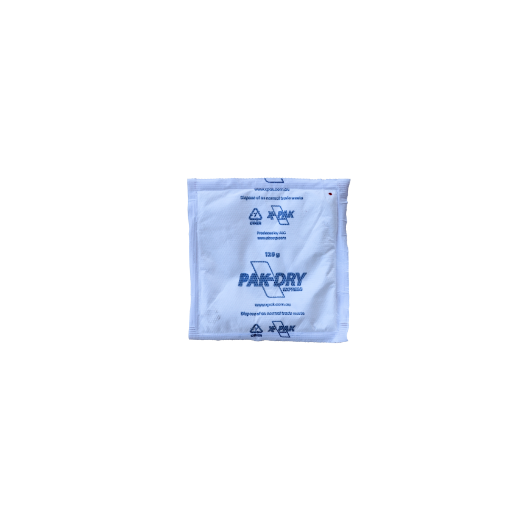
Premium Desiccant Bags: Safeguarding Your Shipped Products with Superior Moisture Protection
When you need your products to reach their destination in a secure and dry condition, our desiccant bags, also known as moisture absorber bags, serve as the ultimate solution for extending the longevity of your packaged goods. These container desiccants actively attract and absorb moisture, ensuring that your goods remain safe and dry during transportation.
Our Desiccant Bags Prevent:
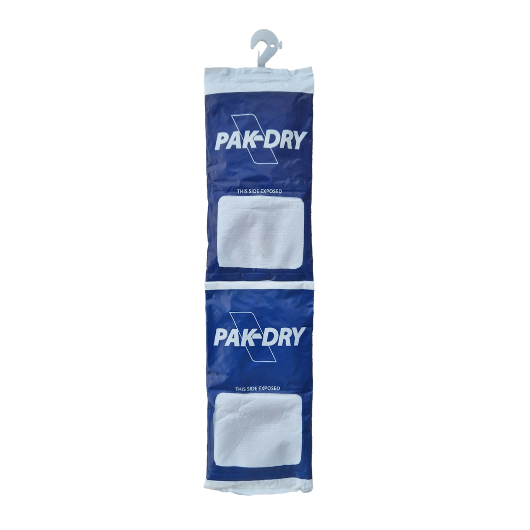
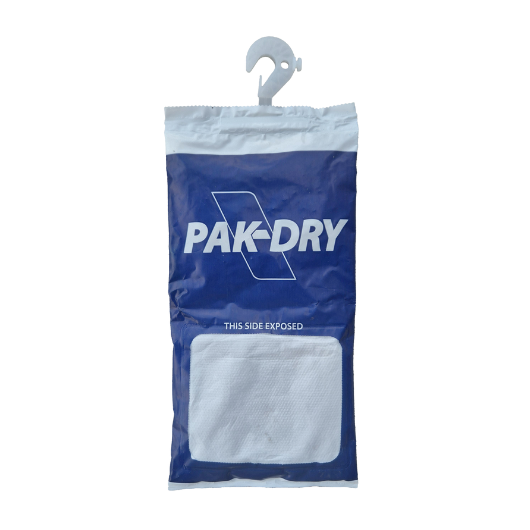
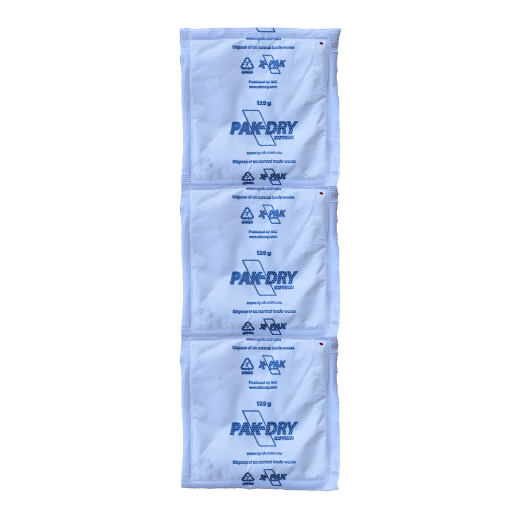
Our 100% leakproof, super-absorbent, gel-based container desiccant, Pak-Dry, was specifically engineered for long-haul cargo trips. It provides a solution to maintain a dry environment for your goods over an extended period. Pak-Dry forms a gel once it absorbs water, delivering a reliable and effective moisture control solution for your cargo.
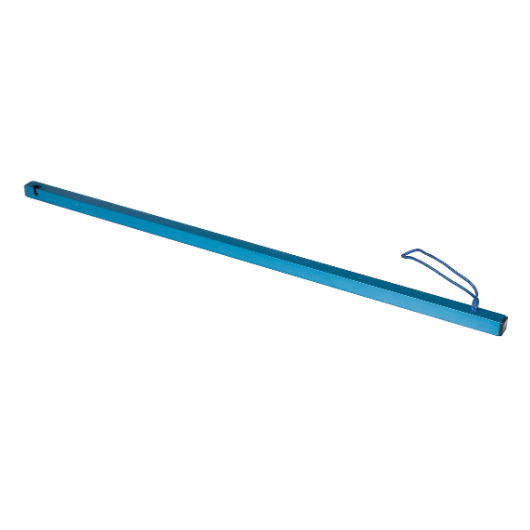
Pak-Dry is manufactured using a patented one-way membrane to ensure leakproof performance throughout the journey. It is applied using a unique hanger tool, providing a secure and swift application method.
The effectiveness of our desiccant bags means you can use less bags for each trip – we recommend four 1kg bags per 20ft shipping container in comparison to most other bags on the market which require 8 bags per container.
Every cargo shipment is unique, requiring a customised approach to determine the ideal desiccant quantity. Factors such as the number of transit days, temperature fluctuations, and the mode of transport are crucial considerations.
Understanding the sensitivity of your cargo to moisture damage is vital and varies from shipment to shipment. Our experts can assist in determining the correct solution required, ensuring your cargo arrives at its destination moisture and damage-free.
We can help you select the right container desiccants solution for your needs with our free site visit. Contact us on 1300 551 281 to discuss your load restraint needs or chat with us for more information.
These are the most commonly asked questions. Here’s everything you need to know about how our products work in your industry.
Desiccant bags are moisture-absorbing packets or pouches designed to control humidity and prevent moisture damage to goods during shipping. They are commonly used to protect products sensitive to moisture, such as electronics or textiles, wooden, or food and beverage products.
Desiccant bags contain a moisture-absorbing material (ours are made from calcium chloride), which adsorbs moisture from the surrounding air, reducing humidity within the shipping container and preventing moisture-related issues like mould, mildew, and corrosion.
Desiccant bags are beneficial for a wide range of goods, including electronics, pharmaceuticals, textiles, leather goods, and food and beverage products. Any items vulnerable to moisture damage during transit can benefit from the use of desiccant bags.
The most cost-effective and practical way to stop condensation or moisture build up in a container is the use of desiccants. In simple terms, these are bags you hang off container lugs that absorb moisture from the air over a period of time. If you are using a container for storage of product, or shipping your goods overseas, the right type and correct number of moisture bags will often prevent moisture damage to your products.
The size and quantity of desiccant bags depend on factors such as the size of the shipping container,the volume of goods, and the expected level of humidity.
To assist you in making a decision, we offer complimentary site visits and assessments to provide recommendations for your cargo. Our team of experts will visit your location, evaluate your product requirements, and provide personalised recommendations based on its weight, size, and unique characteristics.
As a very generic rule of thumb, we’d suggest 4 – 6kg of Pak-Dry desiccant per 20 foot container, or double that (8 – 12Kg) per 40 foot container.
In saying this, here are some additional factors to consider:
Depends on a few variables such as environment and distance, but as a general rule we recommend using 4 x X-Pak PakDry 1kg bags.
There is a huge range of desiccant on the market. A simple example is the small sachet you find inside containers of tablets, or in your shoe box. We focus particularly on larger desiccant bags to absorb the moisture out of the air inside shipping containers. These are mostly used when Australian companies are sending their goods overseas.
This entirely depends on the humidity of the environment they are placed in. For example, if you pack a container full of product with a high water content and place it in a humid environment such as Papua New Guinea, your desiccant bags will fill quickly. When choosing which desiccant to use and how much, there are many factors that need to be considered. In most common export or transport applications where your transit time is 2 – 4 months, the correct number of Pak-Dry desiccant bags will last the journey.
Yes, desiccant bags are generally safe for most products. They are designed to be non-toxic and safe for use with various goods.
Most desiccant bags are designed for single-use to maintain optimal moisture-absorbing capabilities. Reusing desiccant bags may reduce their effectiveness. It’s recommended to use new bags for each shipment.
Desiccant bags should be evenly distributed within the shipping container to ensure uniform moisture absorption. Placing them near the most moisture-sensitive areas of the cargo is advisable.
Desiccant bags are effective in a wide range of temperatures, but their performance may vary. It’s essential to choose desiccant bags suitable for the expected conditions.
In simple terms, a typical clay or mineral desiccant will be a 2Kg bag that absorbs around 60 – 70% of its own weight in terms of moisture. They are the old traditional desiccant bags used and are becoming increasingly unpopular due to their weight and the fact they are less environmentally friendly to ship, due to the large quantity required per container. A Calcium-Chloride Pak-Dry 500g desiccant bag have a 300% absorption rate and will generally out-perform a 2Kg mineral desiccant, and be much easier to install
There are a lot of desiccant types available and for many different applications. The most common types of desiccants are silica gel desiccants, clay based desiccant, Mineral desiccants, Container Moisture absorber bags, Dry bags, Container humidity bags and much more. A ‘fun fact’ for the records: Rice is actually a form of desiccant, that’s why putting your phone in rice if its fallen in water can help pull the moisture out of it quickly!
Desiccant bags have a shelf life of 3 years from manufacturing date if unopened and stored correctly.
Please note we only supply products Australia-wide. We do not provide international shipping unless requested by the customer.
We are confident in the quality of our products – 100% of our customers are satisfied! Want to try prior to purchasing? An X-Pak load restraint expert will be in touch and can arrange for a sample to be sent to you. *T&Cs apply*
We are confident in the quality of our products – 100% of our customers are satisfied! Want to try prior to purchasing? An X-Pak load restraint expert will be in touch and can arrange for a sample to be sent to you. *T&Cs apply*
National Business & Account Manager
Tom has built years of hands-on experience in logistics and load restraint across multiple industries. In his role as Business & Account Manager, supporting customers nationally, he combines strong sales and account management capability with a commitment to delivering high-quality customer outcomes.
Through ongoing professional development, Tom ensures his advice reflects current industry best practice and evolving compliance standards.