
In the food and beverage manufacturing industry, every link in the supply chain is crucial for delivering fresh, high-quality products to consumers. While aspects like temperature control often take centre stage, load securement tools are equally critical factors that significantly impact product integrity, safety, and operational efficiency during transit.
The Crucial Role of Load Securement Tools in Food & Beverage Logistics
Implementing effective load securement practices with the right tools offers numerous benefits to food and beverage companies:
1. Product Protection and Quality Assurance with Dunnage Bags and Cargo Straps:
Utilising load securement tools such as cargo straps and dunnage bags prevent items from shifting during transportation. This reduces the risk of damage caused by collisions, sudden stops, or rough road conditions, ensuring products arrive intact, maintaining customer satisfaction. This is especially crucial for:
- Delicate produce like berries and stone fruits
- Glass-bottled beverages
- Dairy products sensitive to movement
- Goods that can easily crumble
2. Moisture Control with Desiccant Bags
By utilising desiccant bags, you can protect the moisture levels that your food and beverages are exposed to, preserving the quality of your products, which is vital for:
- Preserving the crispness of edible products
- Preventing mould growth in dried goods
- Maintaining the quality of powdered products like milk powder or instant coffee
3. Container Security with Container Lashing and Door Tarps:
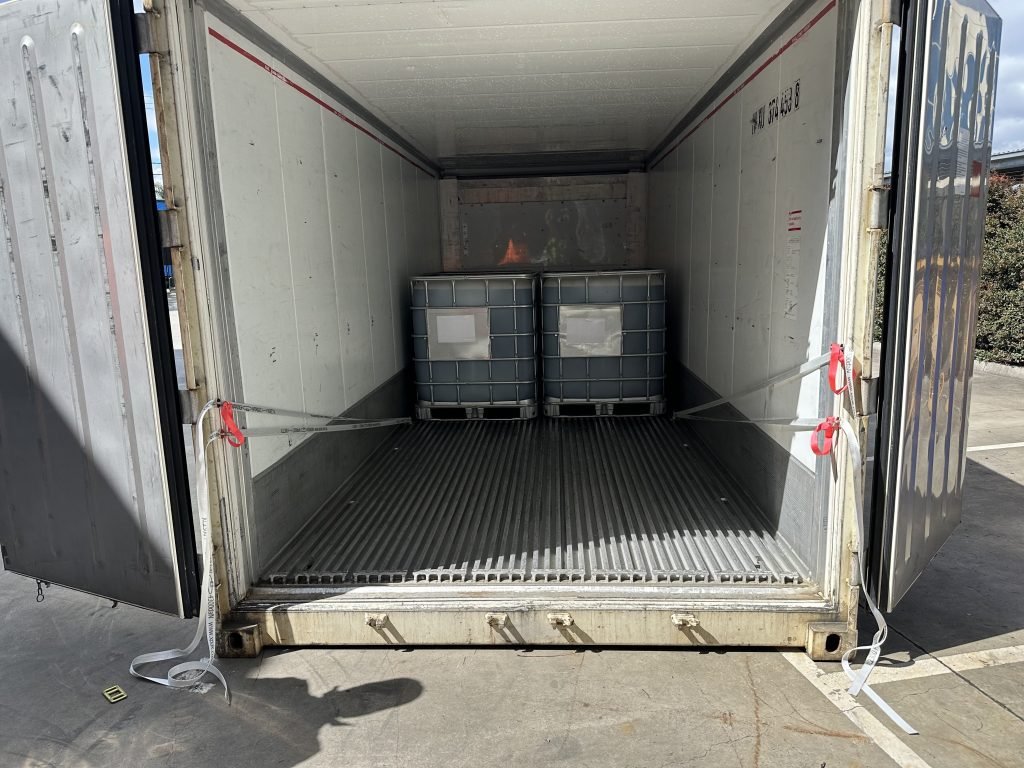
Container lashing secures goods inside shipping containers, ensuring overall stability during transit. Container door tarps protect products, particularly hand-stacked ones, from falling out when container doors are opened.
4. Operational Efficiency and Cost Reduction
Effective use of load securement tools streamlines the supply chain by:
- Reducing product returns due to transit damage
- Minimising the need for repacking or reprocessing damaged goods
- Enabling faster loading and unloading times, crucial for perishable items
- Optimising space in containers and trucks
Properly secured loads contribute to overall safety, whether that be by container, truck, road, or rail safety. Stabilising food and beverage products with solutions like dunnage bags and cargo straps prevents them from falling or tipping, protecting drivers, other operations staff, and property.
5. Regulatory Compliance:
Proper use of load securement tools is essential for:
- Complying with food safety standards set by FSANZ (Food Standards Australia New Zealand)
- Meeting export requirements for international markets
- Protecting brand reputation by ensuring products arrive in perfect condition
Adhering to load securement regulations, as set by the National Heavy Vehicle Regulator (NHVR) and state road authorities, is essential. It’s also important to stay updated on any guidelines issued by Australian Standards and WorkSafe authorities in your state or territory.
6. Cost-Effectiveness:
While there’s an initial investment in load securement tools, the long-term benefits outweigh the costs. Reduced product damage, improved efficiency, and ensured compliance led to significant savings over time.
Different sectors within the food and beverage industry require tailored approaches using various load securement tools. For example, in the beverage industry:
- Palletised goods and cargo straps for securing kegs and bottles
- Dunnage bags for stabilising pallets of canned beverages
- Container lashing for export shipments
Choosing the Right Load Securement Tools
Selecting the right load securement tools depends on factors such as product type, travel distance, and transportation mode. Some essential tools include:
- Cargo straps: Secure items in place, making them easy to transport and preventing movement during transit.
- Container lashing: Secures goods in containers from moving around, ensuring overall stability. Lashing is tied using hooks inside the containers.
- Dunnage bags: Fill void spaces between food and beverage, providing additional stability and reducing product damage.
- Desiccant bags: Control moisture levels, crucial for preserving food quality.
- Container door tarps: Protects products, particularly hand-stacked ones, from falling out of container doors when open.
Consulting with load restraint experts like X-Pak Global can help businesses make informed decisions tailored to their particular needs. X-Pak Global’s extensive experience and innovative solutions ensure companies receive expert guidance on optimal load securement strategies, maximising both safety and efficiency in their operations.
The Impact of Proper Load Securement
By prioritising load securement, food and beverage companies can:
- Ensure product integrity, minimise waste and maintain customer trust.
- Enhance safety, protect drivers, other operational staff, and the general public when being transported.
- Maintain regulatory compliance and avoid potential fines and legal issues.
- Optimise operational efficiency, reducing delays and improving overall performance.
- Achieve cost savings through reduced product damage and improved logistics.
The Bottom Line
Investing in proper load securement tools and practices is essential for food and beverage companies aiming to optimise their supply chain. X-Pak Global has successfully implemented tailored load securement solutions for leading Australian food and beverage manufacturers, including major breweries, dairy producers, and fresh produce distributors, demonstrating our expertise in addressing industry-specific challenges and enhancing supply chain efficiency.
Explore our case studies on our website to see how we can help your business achieve similar results, or contact us today on 1300 551 231 for a free consultation.