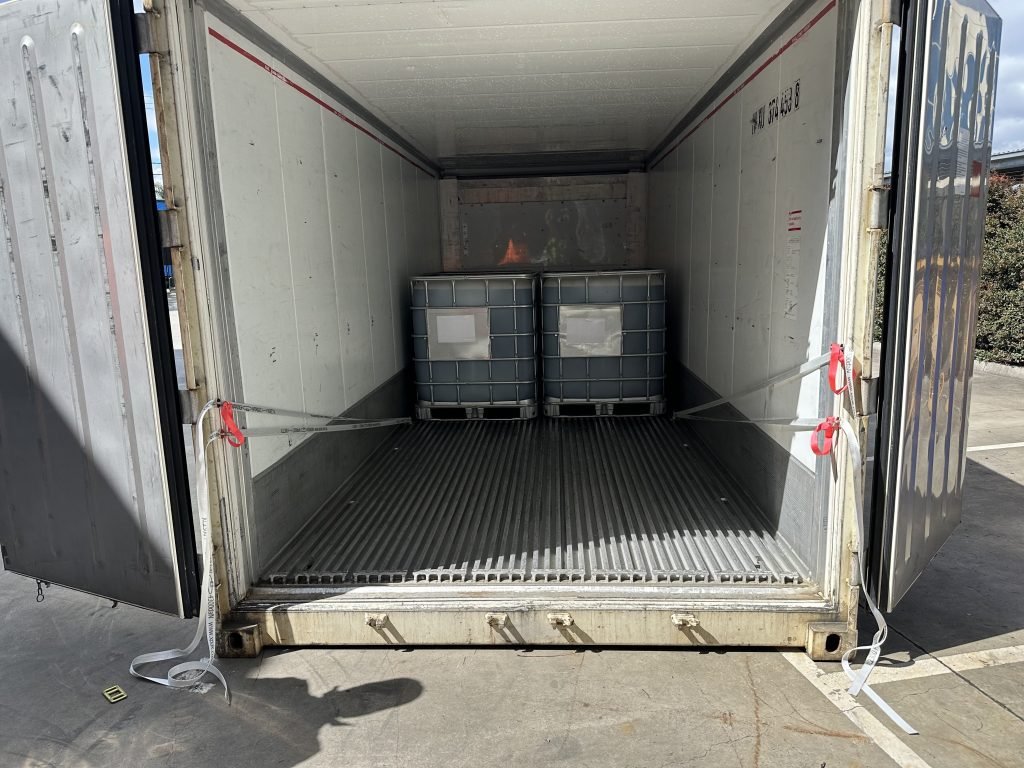

In cargo transport, understanding the different lashing types is crucial for ensuring load safety and compliance with regulations. Tie down lashing and direct lashing represent two predominant approaches, each with its own strengths and applications.
Tie down lashing: understanding the basics
Tie down lashing, also known as over-the-top lashing, is a common cargo securement technique. Tie down lashing involves securing the load by applying downward pressure using lashing straps or cargo lashes. While familiar to many, it’s important to recognise that this method relies primarily on the tensioning force of the restraint system, rather than on its full breaking strength.
This characteristic often necessitates the use of multiple lashing straps or ‘Red Lash’ to achieve adequate securement, especially for heavier loads.
Direct lashing: maximising efficiency with belly or choker techniques
Direct lashing, also known as belly or choker techniques, offers a more efficient approach to cargo securement. Direct lashing creates a direct connection between the cargo and the transport unit in the anticipated direction of movement.
The key advantage of direct lashing lies in its ability to transfer forces acting upon the cargo directly to the lashing material. This direct transfer allows for maximum utilisation of the lashing tool’s strength, often resulting in fewer lashings being required overall.
Calculating lashing requirements
When using tie down lashing, calculations typically consider only the tension force of the system, usually around 500kg per tie down, regardless of the lashing strap’s strength. In contrast, direct lashing calculations can use the actual Safe Working Load (SWL) of the system. For instance, the Cargo-Lash system allows for 75% SWL, while ratchet straps or chains permit 50% SWL in direct lashing applications.
Watch this instructional video here:
Identifying the weakest link in your lashing system
In any cargo lashing system, it’s crucial to identify the weakest component, often the lashing point on the flat rack or trailer. When securing cargo, aim to restrain the load in all directions using the SWL of the weakest link in your lashing system.
Cost-effective and efficient cargo lashing
Direct lashing, particularly using systems like Cargo-Lash, often proves to be the most time- and cost-effective method for securing cargo. The Cargo-Lash system is much more cost-effective for one-way use in comparison to traditional ratchet straps or chains, and with its higher SWL percentage when used in direct lashing applications, fewer lashings are required overall.
Lashing accessories and tools
In addition to the lashing types discussed, it’s worth noting the importance of proper lashing accessories and tools. These can include corner protectors, edge protectors, and tensioning devices, all of which play crucial roles in ensuring the effectiveness and longevity of your cargo lashing setup.
The bottom line
By choosing the most appropriate method for your specific cargo and transport scenario, you can ensure the safety of your load and compliance with relevant regulations. Whether you opt for tie down lashing or direct lashing, the key lies in proper application and calculation of lashing requirements.
Contact Us
If you need more information on cargo lashing techniques, lashing types, or want to purchase superior lashing straps and accessories, contact X-Pak Global at 1300 551 281. Our experienced team is ready to guide you on selecting the right lashing tools and techniques for your specific cargo securement needs.