Precision and safety are crucial for protecting products during storage, shipping, and display. Two popular packaging methods—stretch wrapping and heat shrink wrap—offer distinct benefits based on their materials, application methods, and outcomes. Both techniques secure items, and understanding their differences is key to choosing the appropriate packaging solution for your needs.
I. What Is Stretch Wrap?
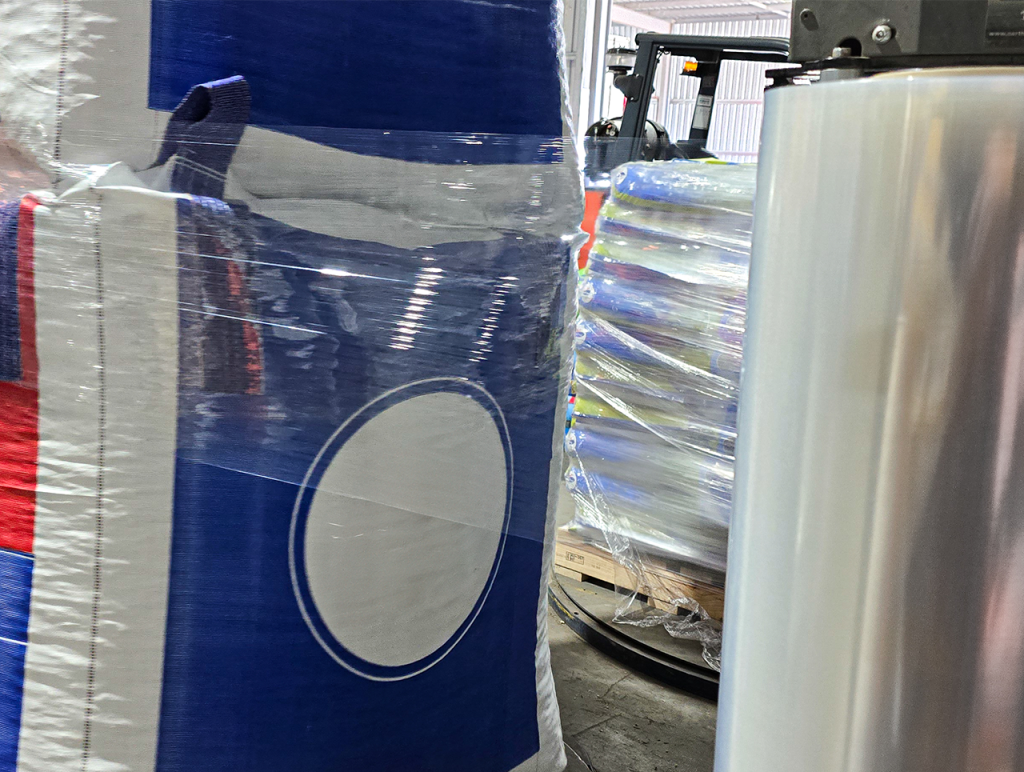
Stretch wrap (or stretch film) is a highly elastic plastic film designed to cling to itself. It is manually or mechanically wrapped around items on pallets or individual products. Its flexibility allows the film to conform closely to the shape of the load, keeping items securely in place without the need for adhesives or additional tools. This versatility means stretch wrapping in various thicknesses, colours, and configurations to suit diverse packaging requirements is possible.
As it relies on tension rather than heat, stretch wrapping is especially effective for securing items during transit and storage. Whether applied by hand or via automated machinery, this method prevents shifting and reduces the risk of damage by forming a continuous, protective barrier around goods.
Benefits of Using Stretch Wrapping:
-
- Versatile and Cost-Effective: Stretch wrapping is highly adaptable. It is commonly used to secure pallet loads because it stabilises products during transportation. The elastic nature of the film allows it to wrap tightly around irregularly shaped items, ensuring that nothing shifts during transit.
-
- Manual and Machine-Aided Options: While many facilities still employ hand wrapping, the manual process can be labour-intensive and may lead to worker fatigue or injury resulting from repetitive bending and twisting. Automated stretch wrapping machines provide a consistent wrap with minimal material waste. These machines can stretch the film up to 25–40% further than manual applications, ensuring a tighter grip and reducing overall film usage. This translates into cost savings and increased workplace efficiency.
II. What Is Heat Shrink Wrap?
-
- Heat shrink wrap involves a plastic film designed to shrink tightly around products when heat is applied. Available in rolls or pre-formed bags, the film is loosely applied to an item and then heated using specialised equipment, such as heat shrink guns or heat tunnels. As the film contracts, it conforms to the item’s contours, creating an airtight, tamper-evident seal.
-
- Heat shrink wrap is a versatile and robust packaging material designed for securing large or irregularly shaped items. Also known as heat shrink film or PE shrink film, this material creates a waterproof barrier that conforms tightly to any shape when heat is applied. Its remarkable adaptability makes it particularly valuable for protecting oversized items, while its durability provides excellent security against tampering. Once properly applied, the wrap forms a tough protective layer that resists tearing by hand, effectively safeguarding the contents from both environmental factors and potential theft.
Benefits of Using Heat Shrink Wrap:
-
- Superior Waterproof Protection: Heat shrink wrap creates an impenetrable seal that fully encases items of any size or shape. When heat-activated, the polyethylene film shrinks to form a tight, waterproof barrier that securely protects valuable items like boats and industrial equipment from moisture, weather damage, and environmental exposure.
-
- Enhanced Security: The industrial-grade film provides exceptional tamper resistance once applied. The tough polyethylene material cannot be easily torn by hand, creating a secure protective layer that helps prevent theft and unauthorised access.
III. Efficient Application with Specialised Tools
While heat shrink wrap generally requires a higher initial investment than stretch wrapping, its efficiency in material usage and the quality of the seal can balance the cost. Modern packaging operations often incorporate heat shrink guns to speed up the process, ensuring that items are wrapped quickly and securely.
IV. Comparing Stretch Films and Shrink Wraps
Though both stretch films and shrink wraps appear similar at first glance, they differ in several ways:
Material Composition: Stretch films are made from linear low-density polyethylene (LLDPE), which provides excellent elasticity and puncture resistance. Shrink wraps are produced from heat-sensitive PVC or polyolefin, enabling them to contract tightly around objects when heat is applied.
Application Process: Stretch wrapping relies on mechanical tension to secure items without heat, making it ideal for large-scale palletising. Heat shrink wrap requires the film to be loosely applied and then heated, often with specialised equipment like heat shrink guns, to form a secure package.
Cost: Stretch films offer a more cost-effective solution for bulk packaging, as they do not require additional heating equipment. Shrink wraps, though usually more expensive, provide added benefits such as a tamper-evident seal and enhanced presentation, making them ideal for high-value or sensitive items.

Wrapping Up
Both stretch wrapping and heat shrink wrap have distinct advantages that make them suitable for different packaging scenarios.
Stretch wrapping is excellent for securing large loads and is more economical for palletised goods. Its ease of application, manually or by machine, ensures that items remain stable during transit without additional tools.
Heat shrink wrap offers a superior seal by using heat to form a tight, conforming package around each product. This method is particularly valuable in industries where tamper resistance, and protection from environmental factors are paramount. With heat shrink guns and automated heat tunnels, businesses can achieve rapid and consistent wrapping results. The main tradeoff is that heat shrink requires more specialised equipment and training to apply properly, whereas stretch wrap can be applied with minimal training and equipment investment.
Choosing between these two methods depends on your specific packaging needs. Consider the nature of your products, the required level of protection, and the efficiency of your packaging process – it will enable you to optimise both cost and product safety while enhancing overall operational efficiency.
To discuss further contact X-Pak Global at 1300 551 281, and our team will gladly assist you.