
Choosing the right stretch wrap industrial packaging method can significantly impact your operational efficiency, product safety, and bottom line. At X-Pak, we understand that every warehouse has unique needs. That’s why we offer both hand and machine stretch wrap for pallets. But how do you know which stretch wrap is right for your business? Let’s break it down.
Hand Stretch Wrap: The Flexible Solution for Warehouses
Pros:
- Low Initial Investment: Hand stretch wrap requires minimal upfront costs – just the film and a dispenser.
- Versatility: Ideal for wrapping irregularly shaped items or pallet loads of varying sizes.
- No Training Required: Most warehouse workers can quickly learn to apply hand stretch wrap effectively.
- Portable: Can be used anywhere in your facility, perfect for finding stretch wrap solutions near me.
Cons:
- Time-Consuming: Wrapping pallets manually takes longer than machine wrapping.
- Inconsistent Application: Film tension and overlap can vary between workers and wraps.
- Physical Strain: Can lead to worker fatigue or injury if proper techniques aren’t used.
X-Pak Spotlight: Our X-Pak Cast Hand Stretch Wrap is available in various thicknesses (17-30 micron) and lengths (300-450m), ensuring you have the right film for your industrial packaging needs.
Machine Stretch Wrap: The Efficiency Powerhouse for Warehouses
Pros:
- Speed: Significantly faster than hand wrapping, especially for high-volume pallet operations.
- Consistency: Ensures uniform film tension and overlap for every pallet in your warehouse.
- Cost-Effective for High Volume: Despite higher initial investment, can reduce stretch wrap usage and labour costs over time.
- Reduced Physical Strain: Minimises repetitive motions for warehouse workers.
Cons:
- Higher Initial Cost: Stretch wrap machines represent a significant upfront investment for your warehouse.
- Less Flexible: May struggle with very irregular pallet loads.
- Maintenance Required: Machines need regular upkeep to perform optimally.
- Space Considerations: You’ll need dedicated warehouse floor space for the machine.
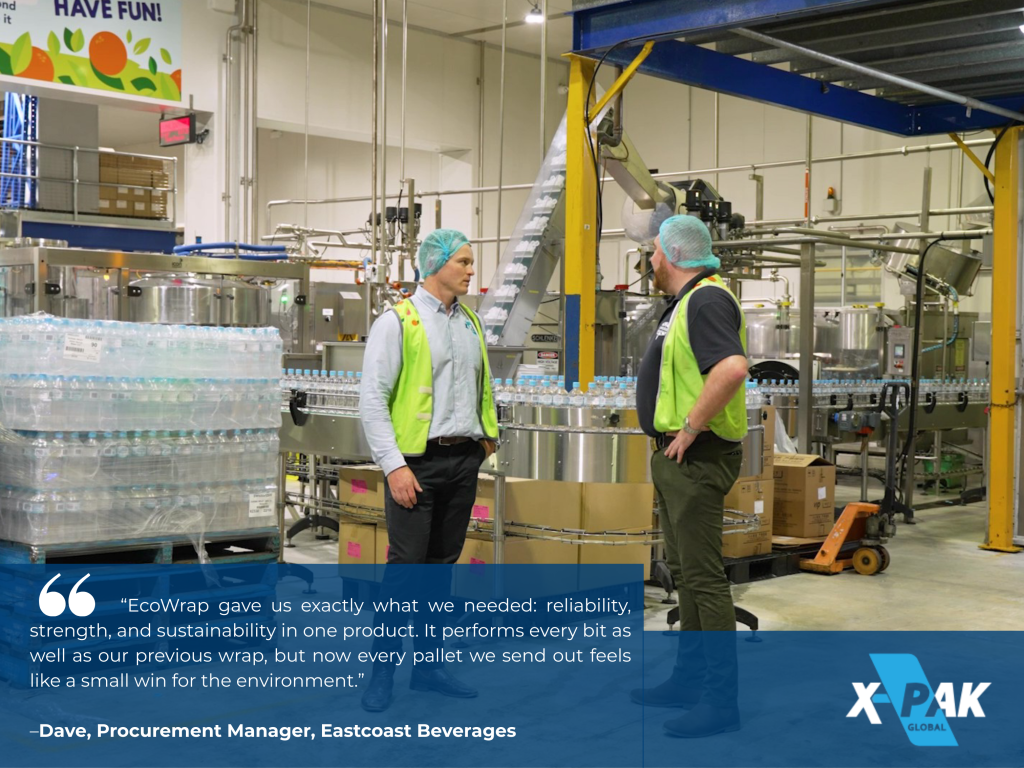
X-Pak Spotlight: Our X-Pak Cast Machine Stretch Wrap comes in various options, from 20-35 micron thickness and 900-1600m lengths, optimised for machine application in industrial packaging. We also have our EcoWrap made out of 30% recycled content, for a sustainable machine wrap option.

Choosing the Right Stretch Wrap Method for Your Warehouse
Consider these factors when deciding between hand and machine stretch wrap for pallets:
- Volume: If you’re wrapping more than 15-20 pallets per day, a machine might be more efficient for your warehouse.
- Load Consistency: For uniform pallet loads, machine wrapping excels. For varied or irregular loads, hand stretch wrap offers more flexibility.
- Budget: Consider both immediate costs and long-term savings. While machines cost more upfront, they can save money over time for high-volume warehouse operations.
- Space: Do you have room for a stretch wrap machine? Our OR-1000 and OR-2000 models have a relatively small footprint but still require dedicated warehouse space.
- Labour Costs: Machine wrapping can significantly reduce labour time in your warehouse, which may offset the initial investment.
- Film Usage: Machines typically use stretch wrap more efficiently, which can lead to significant material savings over time.
The Hybrid Approach to Warehouse Stretch Wrap
Many warehouses find that a combination of both methods works best for their industrial packaging needs. For example, using machine wrap for standard pallets and hand stretch wrap for irregular loads or low-volume periods.
Optimising Your Industrial Packaging with the Right Stretch Wrap
Both hand stretch wrap and machine stretch wrap have their place in modern warehouses and manufacturing facilities. The right choice depends on your specific industrial packaging needs, pallet volume, and operational setup.
At X-Pak, we’re committed to helping you find the perfect stretch wrap solution near you. Whether you need high-quality hand stretch wrap for flexibility, efficient machine stretch wrap for high-volume pallet operations, or a combination of both, we have your warehouse covered.
Remember, the goal is to ensure your products reach their destination safely and cost-effectively. If you’re still unsure which stretch wrap method is right for your warehouse, our team of industrial packaging and load restraint experts are always ready to provide free personalised advice and on-site demonstrations.
Ready to optimise your stretch wrap process for pallets? Contact X-Pak today or visit us and let’s wrap up a solution that’s perfect for your warehouse’s industrial packaging needs!
You can see all of our stretch wrap solutions here.