When it comes to securing cargo safely and efficiently, dunnage bags are an incredibly valuable tool. But like any cargo restraint systems, using them incorrectly can lead to costly and dangerous outcomes. In this guide, we’ll explore the most common dunnage bag mistake and how to avoid them—with pro tips to ensure you get the best results from your investment in dunnage air bags.
Whether you’re transporting freight across Australia by road, rail, or sea, avoiding these dunnage bag mistakes can significantly improve the stability of your loads and prevent damage in transit.
1. Using the Wrong Inflation Equipment
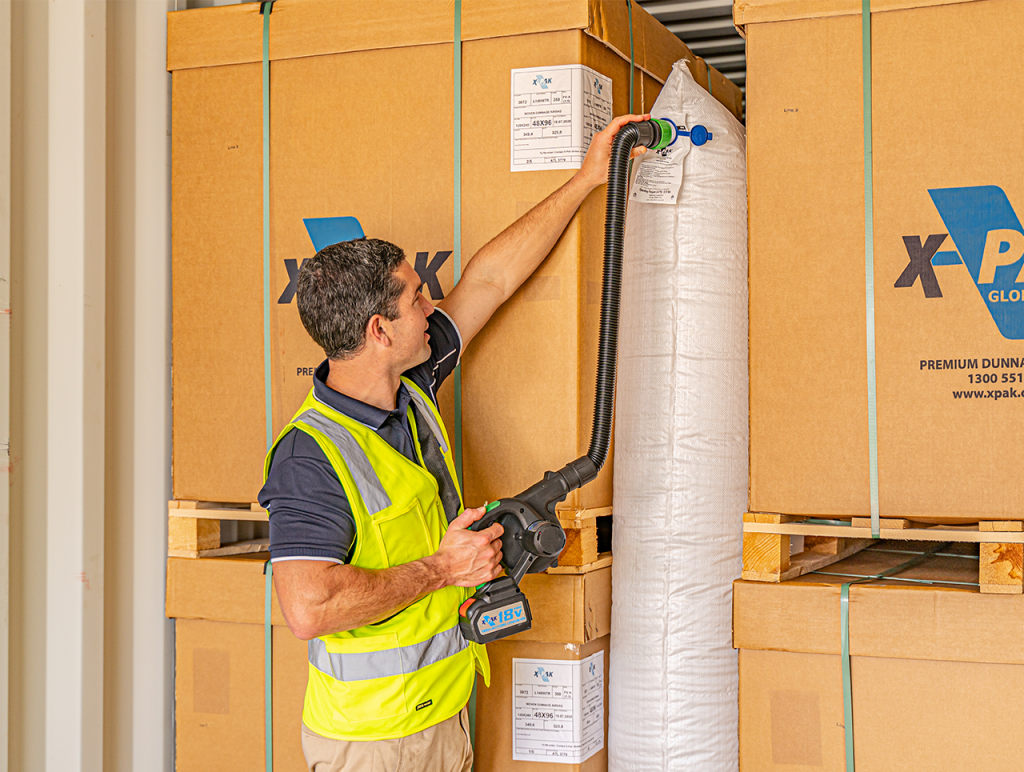
One of the most common dunnage bag mistake is using an incompatible air bag inflator. Not all valves are the same, and using the wrong tool may lead to underinflation or damaged valves. Always use a portable dunnage bag inflator that suits the valve type on your bags to ensure proper pressure and sealing.
Pro tip: Our Inflate-X Pro portable inflation unit is designed with precision pressure control that prevents over-inflation—a critical safety feature that eliminates guesswork and ensures your dunnage air bags reach optimal pressure every time. This professional-grade portable dunnage bag inflator works seamlessly with all our dunnage bag ranges and provides consistent, reliable results in the field.
2. Ignoring Sharp Edges
Cargo with exposed corners or sharp edges can easily puncture a dunnage bag. A simple layer of acking grade ply, cardboard, or corflute can prevent these incidents. Neglecting this step is a classic dunnage bag mistake that can compromise the entire restraint system.
X-Pak’s dunnage bags are engineered with reinforced construction, but even the most robust bags benefit from proper edge protection. Our range includes various strength levels specifically designed to handle different cargo types and transport conditions.
3. Placing Bags Directly on Container Floors
Shipping container floors may contain nails, splinters, or moisture—especially in older or high-use containers. Placing dunnage bags directly on these surfaces can result in punctures or moisture damage, particularly if you’re using paper-based bags. Always raise or shield bags from direct floor contact, using items like slip sheets or pallet liners.
4. Overfilling Beyond the Bag’s Rated Capacity
Dunnage bags are designed to fill specific void sizes between cargo at a set pressure. Overinflating a bag is possible, and can cause the bag to burst under pressure. Choose the right size and strength of bag to match the void you’re trying to fill and only fill the bag pressure to the maximum recommended capacity.
Inflate-X Pro advantage: The Inflate-X Pro portable inflation unit eliminates the risk of overfilling through its intelligent pressure control system. Unlike basic inflators that rely on guesswork, the Inflate-X Pro automatically monitors bag pressure and stops inflation at the optimal level for each bag type. This precision prevents burst incidents while ensuring maximum void-filling effectiveness across all our strength levels.
5. Using Two Bags Side-by-Side
Trying to use two smaller container air bags to fill one large gap is never a good idea. This often results in slippage, uneven pressure, and instability. Instead, select a single dunnage air bag that’s correctly rated for the void. Load restraint systems work best when pressure is evenly distributed.
For exceptionally wide gaps, X-Pak offers specialised dual bags designed specifically for these challenging applications. Unlike improvised side-by-side arrangements, our dual bag systems are engineered as integrated units that maintain proper pressure distribution and eliminate the instability issues common with makeshift solutions. This is another scenario where custom sizing also proves nvaluable—rather than compromising with multiple standard container air bags, a single custom-sized bag or purpose-built dual system provides superior load distribution and eliminates the risk points created by multiple bag configurations.
6. Placing Bags Taller Than the Cargo
When a dunnage bag extends beyond the height of the cargo, air pressure moves toward the path of least resistance—creating a ballooning effect. This is another overlooked dunnage bag mistake that reduces the effectiveness of the restraint. Bags should be equal to or slightly less than the cargo height.
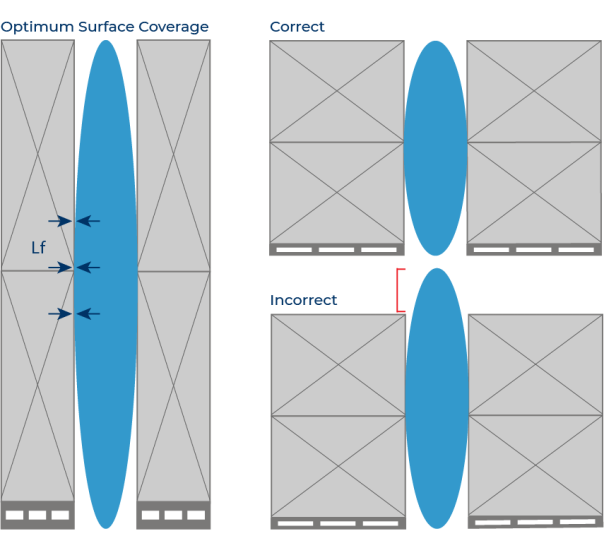
Our dunnage bags are available in multiple height configurations, and with custom sizing options, you can specify the exact dimensions needed for your cargo profile. This precision fit maximises restraint effectiveness while minimising material waste.
7. Using Dunnage Bags in Air Freight
Dunnage bags are not suited for air transport. Cabin pressure variations can lead to inconsistent internal pressure, causing bags to deflate or even explode mid-journey. Stick to recommended applications—such as containers, trucks, and rail—for maximum safety and performance. Ensure it thoroughly that these are not used in air freight as it could be of serious dunnage bag mistake.
For these approved transport modes, X-Pak offers different strength levels from Level 0 through Level 5, each engineered for specific applications and load requirements. Understanding which level suits your transport method is crucial for safe, effective cargo restraint.
8. Not Checking for Leaks After Inflation
One often-overlooked dunnage bag mistake is failing to check for leaks after inflation. Even a small puncture or valve issue can cause gradual pressure loss during transit, compromising your entire cargo restraint system. Always perform a quick visual and pressure check after inflating your dunnage air bags. As it could be a prominent dunnage bag mistake you might overlook.
Detection made easy: The Inflate-X Pro portable inflation unit includes integrated pressure monitoring that helps identify potential leaks immediately after inflation. If a bag doesn’t maintain its target pressure, the unit’s precise gauging system will alert you to investigate further. This early detection capability prevents cargo shifts that could occur hours into your journey when a compromised bag finally fails.
9. Using the Wrong Strength Rating
Dunnage bags are available in different strength levels—from Level 0 to Level 5—each suited to various modes of transport and load weights. Using a low-level bag in a high-pressure environment can lead to failure. This is a technical but critical dunnage bag mistake.
Level selection guide: X-Pak’s comprehensive range covers every application. Level 0 and 1 bags excel in light-duty truck applications, while Level 2 and 3 handle standard container and rail transport. Level 4 and 5 bags are engineered for heavy-duty applications and extreme conditions. Our technical team can assess your specific requirements and recommend the optimal level for your operation, including custom specifications when standard levels don’t perfectly match your needs.
10. Placing Bags Against Container Doors
Positioning a dunnage air bag between your load and the container door may seem like a good idea—but it’s not. Upon opening, the pressure build-up could force the doors open violently, causing injury. Always place bags between stable cargo walls—not exit points.It is one of the dunnage bag mistake people do.
Purpose-built door solutions: For cargo restraint at container doors, X-Pak offers specialised inflatable door tarp systems that are specifically engineered for safe door-end applications. Unlike standard dunnage air bags, these door tarp systems are designed to inflate against doors while incorporating secure lashing points that distribute forces safely. This eliminates the door-opening risks associated with misplaced dunnage bags while providing effective cargo restraint where you need it most.
Proper bag placement is just as important as bag selection. Our site assessment service helps identify optimal positioning strategies for your specific cargo and container types, ensuring maximum safety and effectiveness across all cargo restraint systems.
Pro Tips for Safe and Effective Use
Invest in professional equipment: Use a reliable air bag inflator or portable inflation unit like our Inflate-X Pro to ensure safe, consistent inflation in the field. The investment in proper equipment pays dividends in safety, efficiency, and bag longevity.
Combine with complementary systems: Dunnage bags work best as part of comprehensive cargo restraint systems. Combine them with anti-slip mats and other shipping container restraints to create multi-layered cargo security.
Respect the specifications: Every dunnage air bag has rated limits for pressure, void fill, and load type. Our technical documentation provides clear guidelines, and our custom sizing service ensures you never have to compromise on specifications.
Partner with experts: Work with suppliers like X-Pak who provide not only industrial packaging supplies but also training, technical support, and ongoing guidance across Australia. Our experience across diverse industries means we understand the nuances of different cargo types and transport conditions.
Leverage professional assessments: Take advantage of free load audits or site assessments to optimise your use of shipping container restraints and minimise risk. These assessments often reveal opportunities for custom solutions that standard approaches miss.
Understanding and avoiding dunnage bag mistakes can make a huge difference in cargo security, workplace safety, and freight efficiency. At X-Pak, we offer not only a comprehensive range of dunnage bags in all strength levels and custom sizes, but also the Inflate-X Pro portable inflation unit and expert advice tailored to your logistics challenges.
Our custom sizing capability means you never have to compromise on fit, while our full range of strength levels ensures optimal performance regardless of your transport mode or cargo type. The Inflate-X Pro air bag inflator eliminates over-inflation risks while providing consistent, professional results every time.
Book Your Free Site Visit Today
Avoid costly dunnage bag mistakes with expert advice from X-Pak. Our team offers free site assessments to ensure your cargo restraint systems are safe, compliant, and efficient. We’ll help you select the right dunnage bags, determine optimal strength levels, specify custom sizes where beneficial, and recommend the ideal inflation equipment, including our Inflate-X Pro unit—all tailored to your specific application.
Call us on 1300 551 281 or contact us here to book your free consultation with Australia’s packaging specialists.