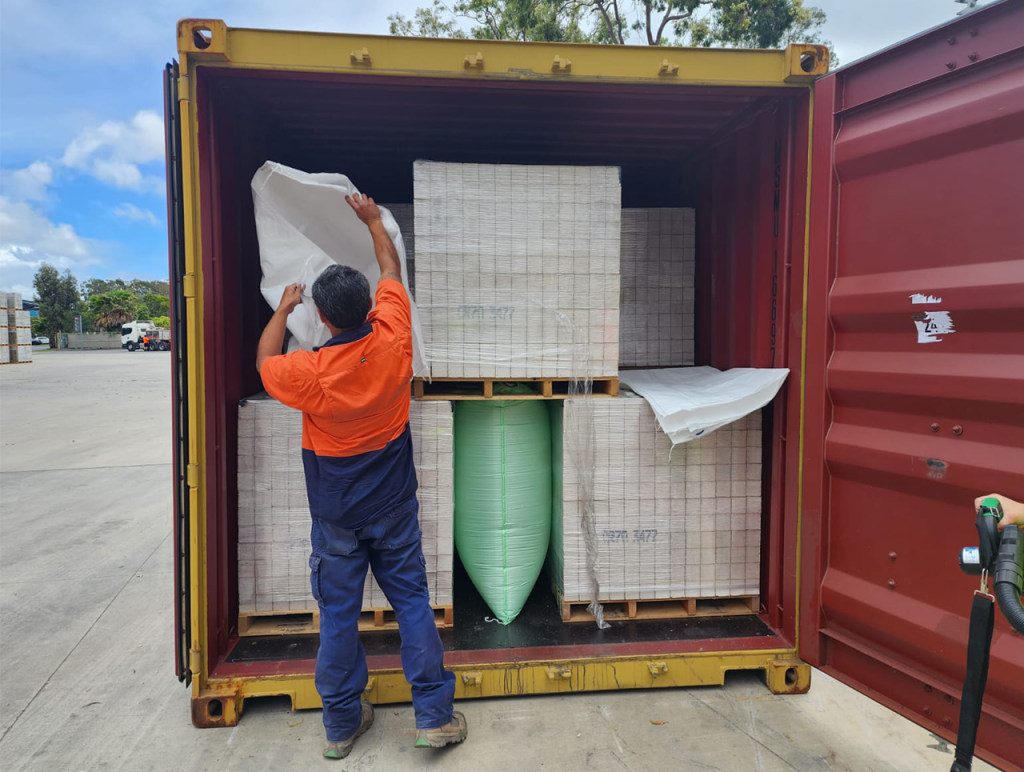
Across warehousing, road transport, rail and sea freight, dunnage bags (also called dunnage air bags or container air bags) help prevent product movement by bracing voids and stabilising loads. The most meaningful environmental gains don’t come from swapping to exotic materials—they come from using each bag multiple times and ensuring that, at the end of life, it’s recycled.
This guide explains how to build a “reuse-first, recycle-always” approach into your load restraint program.
The Two Big Eco Wins
1) Reuse: one bag, many trips
Well-specified dunnage bags can be used repeatedly. In suitable applications and with proper handling, some customers report reusing a bag up to 10 times. Every extra reuse avoids a new bag being produced, transported and disposed of, delivering immediate waste and cost reductions.
How to enable safe dunnage bags reuse
- Inspect before each use: check outer fabric, seams, valve and inner bladder.
- Match bag to the void: correct size, ply/level, and pressure range for the gap and load profile.
- Protect from sharp edges: use corner/edge protection where needed.
- Record cycles: simple tally on the carton or a barcode in the dispatch system helps track usage.
- Remove on arrival: deflate fully, store dry and away from UV to preserve material life.
When not to reuse: if the bag shows abrasion, cuts, valve damage, contamination with oils/chemicals, or if the application has changed (e.g., larger voids or heavier pallets).
2) Inflatable Dunnage Bags – 100% Recyclable at End of Life
When deflated and kept clean, they are 100% recyclable through appropriate soft-plastic or specialised collection streams (availability varies by region and waste contractor). Separating components (e.g., removing accessories) supports higher-value recycling.
A simple recycling workflow
- Deflate completely and detach from pallets.
- Keep bags free of strapping off-cuts, timber splinters and contaminants.
- Consolidate by material type.
- Arrange pick-up with your recycling partner or include in your site’s designated plastics stream.
Why Dunnage Bags Improve Both Efficiency and Sustainability
- Faster loading/unloading: inflation takes seconds; no cutting timber or building bracing.
- Lower handling risk: lightweight compared with timber blocks and heavy fillers.
- Consistent performance: rated to hold position and absorb shock/vibration during transit.
- Less waste on site: a single reusable bag replaces multiple single-use materials.
- Lower cost-to-protect: reuse cycles spread purchase cost over many journeys.
Dunnage Bags Common Use Cases
- Sea freight containers: bracing between pallets or between pallet faces and container walls.
- Road transport: reducing lateral and fore-aft movement on mixed or partial loads.
- Rail: extra stability for longer transits with sustained vibration.
- Mixed cargo: flexible fill for irregular voids where rigid bracing is impractical.
Tip: combine dunnage air bags with correct pallet wrap/hand wrap, edge protection and strapping for a layered restraint system.
Choosing the Right Bag (and Maximising Reuse)
- Strength level: match to gap size, product mass and transport mode.
- Surface conditions: add sleeves or edge protectors around sharp surfaces.
- Valve type & equipment: use specific inflators (such as our Inflate-X Pro and follow recommended pressures.
- Process controls: simple SOPs for inspection, inflation and reuse tracking.
Eco optimisation with X-Pak
X-Pak dunnage bags are designed for multiple reuse cycles (subject to inspection and application) and are 100% recyclable at end of life. Our team can review your current cargo profile, recommend the correct bag specification, and help set up reuse and recycling procedures so you capture the economic and environmental benefits with confidence.
Quick FAQ
Are dunnage bags suitable for every load?
They’re ideal for void filling and stabilisation. Very sharp or abrasive contact points may require sleeves or edge protection.
How many times can I reuse a bag?
It depends on handling and application. With proper care, some customers see up to 10 cycles. Always inspect before reuse.
Can I recycle them with my site’s plastic stream?
Yes—bags are 100% recyclable when clean and sorted; check acceptance with your waste contractor.
Book Your Free Site Visit Today
If you’d like a quick sense-check on your current freight, or help setting up a reuse/recycling workflow for dunnage bags / dunnage air bag / container air bag, our load restraint specialists can visit your site, review the load, and provide a practical plan.
Speak with X-Pak’s packaging specialists about making the switch to eco-friendly dunnage bags. We’ll assess your needs and recommend tailored solutions that work for your business.
Call 1300 551 281 or contact us online to book your free site visit today.