Wrapping pallets with a machine is a practical way to improve load security, cut product damage and streamline warehouse operations. Compared with relying solely on a hand wrap dispenser and hand pallet wrap, machine systems apply pallet wrap with consistent tension and coverage. For businesses already using stretch wraps or bundling wrap, a machine can lift both safety and efficiency while reducing film use.
Why Machine Wrapping Matters
Palletised goods pass through multiple touchpoints—picking, staging, loading and transport. Variations in manual wrapping can lead to under- or over-application, causing movement, crushed corners or unnecessary film use. Machine wrapping delivers uniform containment; pre-stretch and programmed cycles often mean less film per pallet and more reliable protection.
The Main Types of Pallet Wrap Machines
Different sites, products and throughputs call for different machine styles. Here’s a quick overview:
1) Portable / Mobile “Robot” Wrappers
- What they suit: Large or awkward pallets; wrapping in-aisle or in overflow areas.
- How they help: The machine travels around the load, so the pallet stays still—useful for heavy or unstable goods.
- Efficiency angle: Bring the wrapper to the pallet; no dedicated turntable space required.
2) Semi-Automatic Turntable Wrappers
- What they suit: General warehouse use with mixed SKUs.
- How they help: The operator places the pallet on the turntable, selects the program and starts the cycle.
- Efficiency angle: Good balance of speed, footprint and cost; consistent application compared with manual hand pallet wrap.
3) “Stay on the Forklift” / Remote-Start Workflows
- What they suit: High-throughput sites and operators who need to minimise dismounts.
- How they help: Pallet is set down; cycle can be triggered via remote/rope pull/auto-start so the driver doesn’t need to get off the forklift.
- Efficiency angle: Faster turnarounds, less fatigue, improved traffic flow.
4) Rotary-Arm / Overhead Wrappers
- What they suit: Very heavy, tall or unstable loads where the pallet shouldn’t spin.
- How they help: The arm rotates the film around a stationary pallet.
- Efficiency angle: High containment consistency for delicate or top-heavy freight.
5) Inline Systems
- What they suit: High-volume lines with automated conveyance.
- How they help: Fully automatic wrap, cut and clamp integrated into production or dispatch.
- Efficiency angle: Lowest labour touch; highest throughput.
Most modern machines support pre-stretch, variable wrap patterns (top/bottom wraps, banding/roping) and film force settings—key to balancing protection with film savings.
Step-by-Step: Wrapping Pallets with a Machine
- Prepare the load
Stack evenly with heavier items low and flush with the pallet footprint. Use edge protection for sharp corners.
- Position the pallet
Centre it on the turntable or designated wrap zone. For mobile/robot wrappers, ensure adequate clearance.
- Attach the film
Secure the tail to the pallet base or lower layer. Select the program suited to load weight and stability.
- Run the cycle
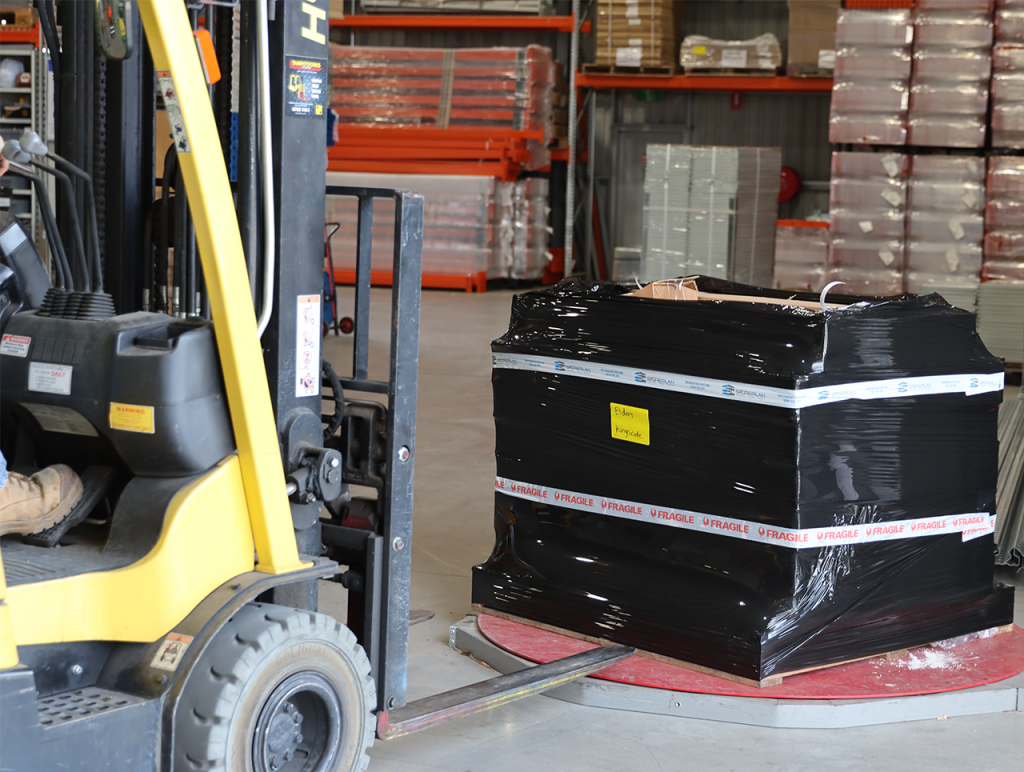
The turntable or wrapper applies stretch wraps with pre-set tension and travel, building containment from the base up.
- Secure the film
Automatic cut/clamp is common; some units require a manual cut and tuck.
- Inspect
Check corners, top cover and base reinforcement. The pallet should be stable without excessive film.
Machine Wrapping vs Manual Wrapping
| Factor | Manual (hand wrap, bundling wrap, hand wrap dispenser) | Machine Wrapping |
| Speed | Slower; operator dependent | Faster; programmable |
| Consistency | Varies by person | Consistent tension & coverage |
| Film Usage | Often higher | Reduced via pre-stretch |
| Safety | Bending/twisting strain | Minimal manual handling |
| Cost Efficiency | Higher labour & film over time | Lower total cost per pallet |
Selecting the Right Machine for Your Site
Consider these practical points before you choose:
- Product profile: weight, height, stability and edges (turntable vs rotary arm).
- Output: pallets/hour and peak periods (semi-auto vs inline).
- Space & traffic: floor space, turning circles, staging zones (portable vs fixed).
- Operator workflow: need to stay on the forklift, remote start, or auto cut/clamp.
- Film strategy: match film gauge/type to machine pre-stretch; keep pallet wrap specs aligned with load profiles.
- Integration: power, ramps/pits, conveyors, safety guarding and SOPs.
Support from X-Pak (Measure → Install → Service)
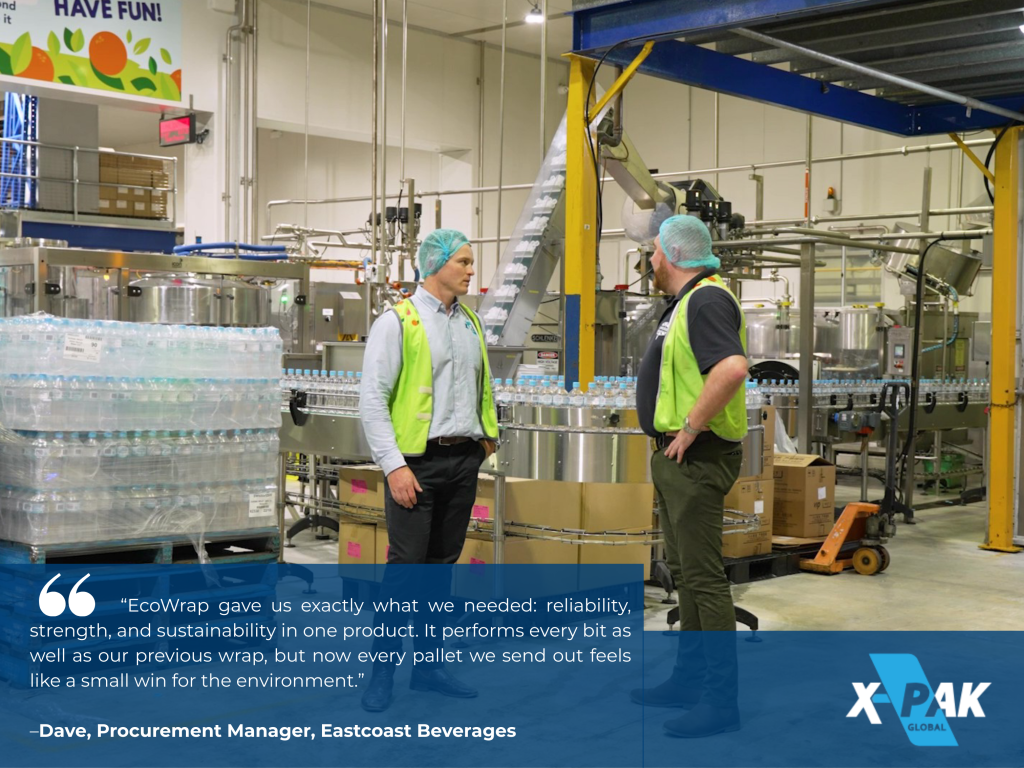
X-Pak supplies a broad range of pallet wrapping machines—from portable mobile units and semi-automatic turntables to rotary-arm and inline systems—alongside pallet wrap, hand pallet wrap, stretch wraps and bundling wrap to suit Australian operations. We also have environmentally friendly EcoWrap products to meet your company sustainability goals. Our machine are:
- Measured correctly: We size the machine to your pallets, load heights and throughput.
- Installed properly: Professional setup ensures safe operation and optimal pre-stretch.
- Serviced locally: Our technicians support training, maintenance and ongoing optimisation.
Explore the range here: Stretch Wrap Machines
Supporting a Safer, More Sustainable Supply Chain
Machine wrapping helps reduce film consumption per load, improves repeatability and lowers rework and damage. Combined with good pack-outs, edge protection and the right film selection, it forms a reliable foundation for safer, more efficient dispatch.
Book Your Free Site Visit Today
If you’d like a practical recommendation on machine type and film settings for your mix of loads, our team can walk your floor, assess workflows and provide options that balance protection, speed and cost. Call 1300 551 281 or contact us via xpak.com.au to book a free site visit.