Transporting goods safely requires much more than standard packaging. It demands a comprehensive approach that integrates product protection, regulatory compliance, and effective load restraint techniques.
For Australian logistics operations, the journey from warehouse to customer involves multiple handling points where proper packaging and restraint make the difference between products arriving intact or damaged.
From manufacturing all the way through to transport, customised solutions are needed to ensure your goods arrive safely and undamaged.
Below, we guide you through proven protection strategies that comply with Australian load restraint regulations while improving efficiency throughout your supply chain.
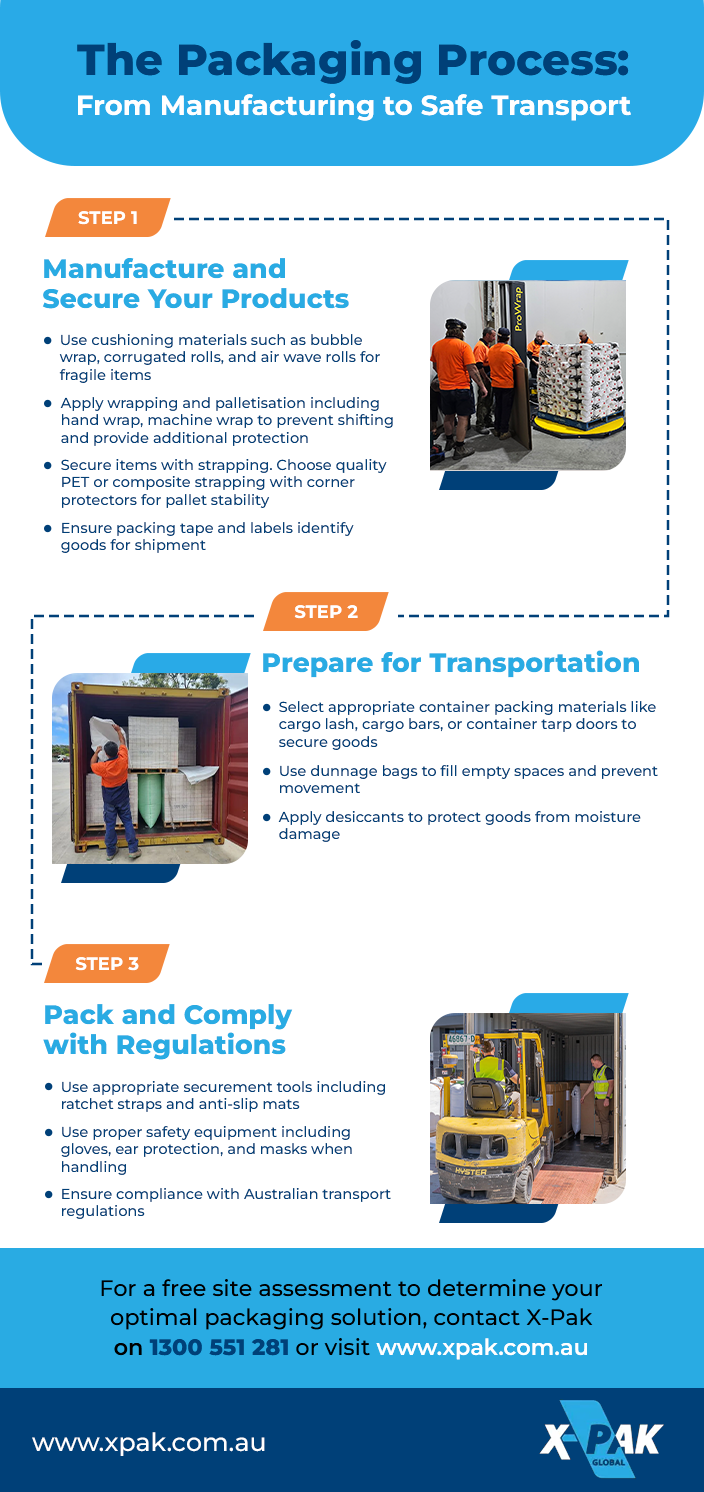
Step 1: Manufacture and Secure Your Products
The packaging process starts right at the manufacturing stage. Once your products are ready, it’s time to secure them for storage and shipment.
Cushioning Materials for Protection
Fragile or sensitive items should always be wrapped with protective materials such as bubble wrap, corrugated rolls, or air wave rolls. These act as a buffer, absorbing shocks and impacts during handling and transit.
Wrap and Palletised for Stability
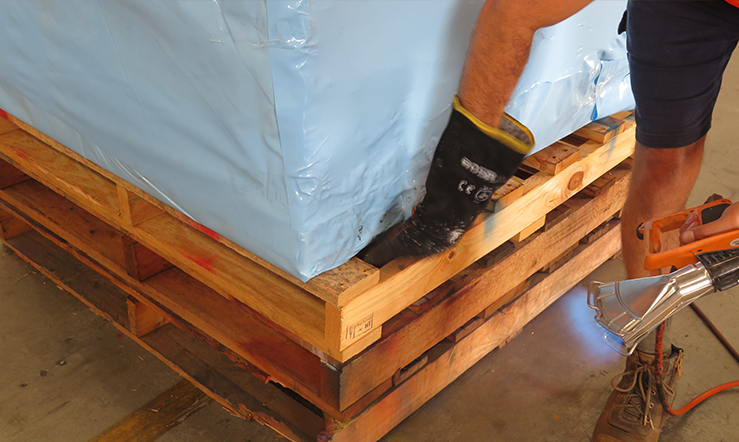
To prevent shifting or damage in transit, wrapping and palletising are essential. Use hand wrap or machine wrap to hold items together and provide added protection against dust, moisture, and movement.
Strapping with Quality Materials
Strapping adds another layer of stability. PET and composite strapping offer high tensile strength and are ideal for securing heavy or irregular loads. Pair these with corner protectors to prevent crushing or edge damage, especially during stacking.
Use Strong Packing Tape and Labels
Don’t overlook the small details—high-quality packing tape ensures cartons stay sealed, while clear and durable shipping labels help identify packages quickly and reduce the chance of misrouting.
Step 2: Prepare for Transportation
Once items are secured, it’s time to prepare them for the journey ahead. This step is all about preventing movement, moisture, and other common transit risks.
Choose the Right Container Packing Materials
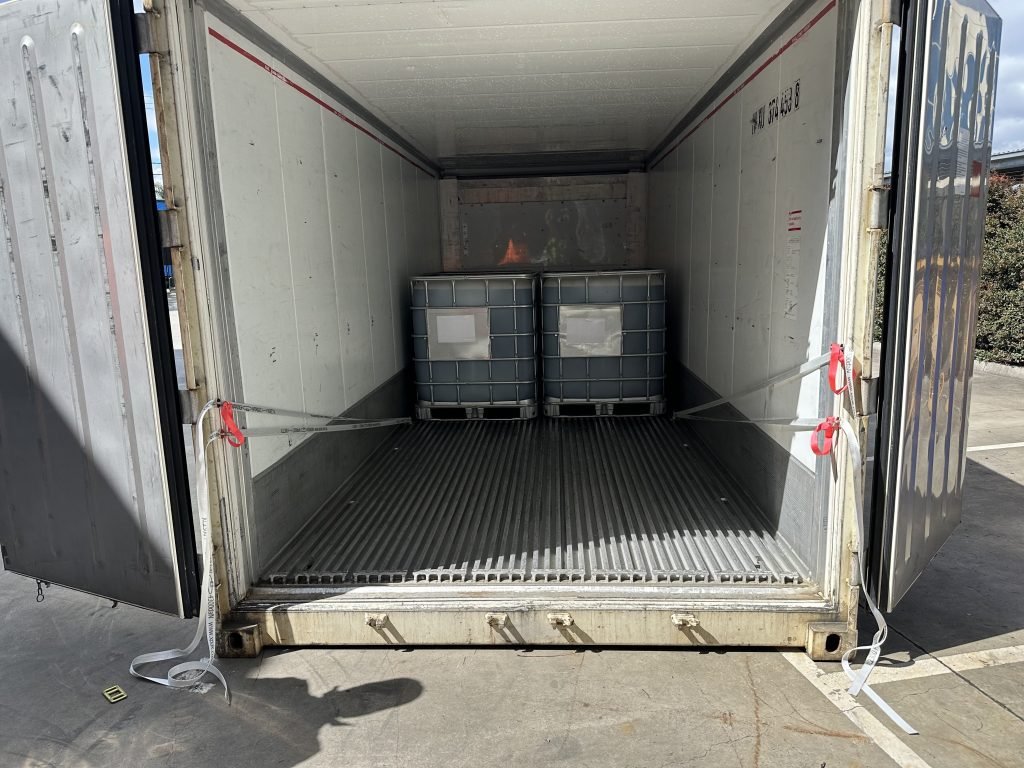
To keep your load secure during shipping, especially in sea or road freight, use specialised tools like cargo lashings, cargo bars, or container tarp doors. These materials help lock the load in place inside containers or trucks.
Fill the Gaps with Dunnage Bags
Empty spaces inside shipping containers can lead to shifting, which increases the risk of damage. Dunnage bags are a reliable and cost-effective way to fill these spaces and keep cargo snug.
Prevent Moisture Damage with Desiccants
Moisture can lead to mould, corrosion, or spoilage—especially in long-haul or international transport. Container desiccant bags absorb excess moisture and are a must-have for sensitive goods like electronics, food items, or machinery parts.
Step 3: Pack and Comply with Regulations
Safety and legal compliance are key to a successful transport operation. This final step ensures everything is packed properly and meets Australian transport regulations.
Use Reliable Load Securement Tools
To keep goods fixed in place, use reliable tools such as ratchet straps and anti-slip mats. These prevent sliding and shifting, especially when roads are uneven or during abrupt stops.
Ensure Worker Safety During Handling
Packaging isn’t just about the goods—it’s also about the people handling them. Provide your team with gloves, ear protection, and masks when required to ensure safe and efficient handling practices.
Stay Compliant with Transport Regulations
Australia has strict guidelines around packaging, labelling, and securing goods for transport. Staying compliant not only ensures safety but also helps avoid costly penalties or shipping delays. Work with professionals who understand these requirements to make sure your packaging ticks all the right boxes.
Get Packaging Right the First Time
Packaging is more than just a final step—it’s a critical link in your supply chain that ensures business continuity and customer satisfaction. Whether you’re transporting goods across states, or exporting to international markets, strategic packaging solutions protect both your products and your reputation.
With the right approach, your packaging becomes an investment that delivers returns through reduced damage, improved efficiency, and complete compliance with Australian standards.
Our free site assessments help you identify the optimal solution for your specific requirements, ensuring you get it right from the start.
Contact us today!