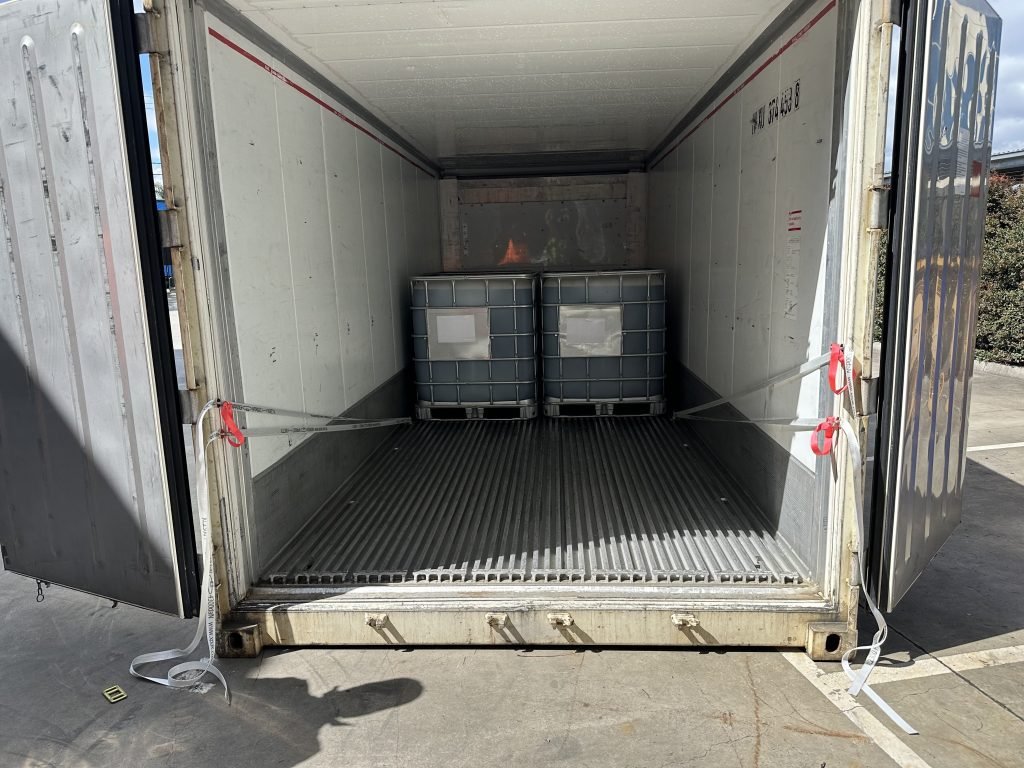
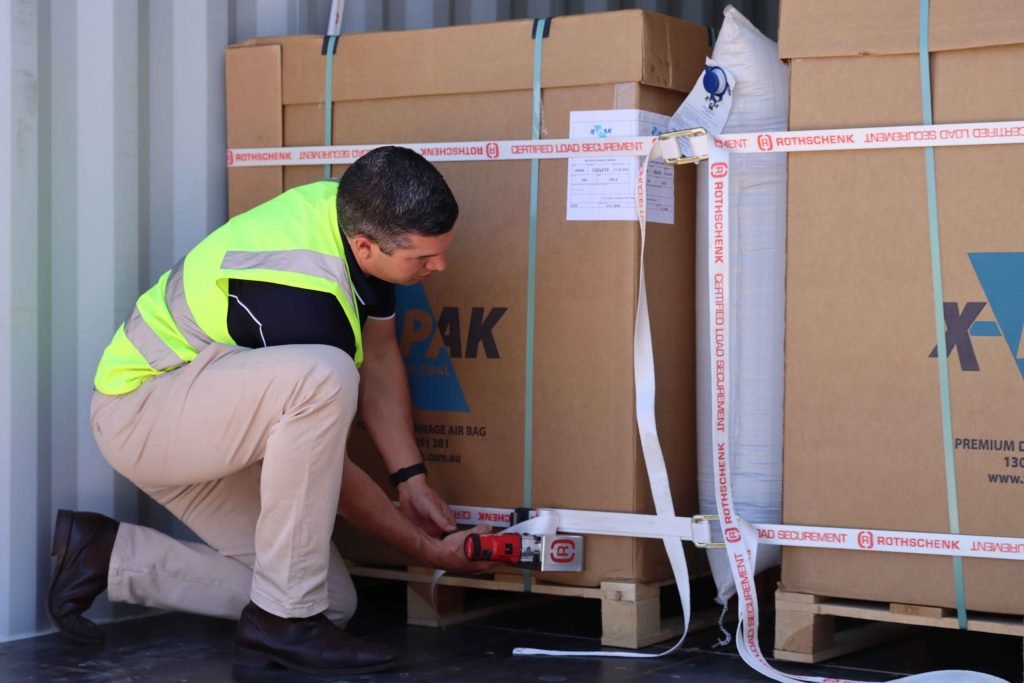
\For Australian logistics operations, calculating load restraints requires specific consideration of your transport mode and cargo characteristics. Here’s what you need to know:
Road Transport Requirements
The Load Restraint Guide 2018 specifies minimum restraint forces:
-
- Forward direction: 80% of load weight for emergency braking scenarios
-
- Sideways and rearward: 50% of load weight for cornering and acceleration
- Upward: 20% of load weight for uneven road surfaces
Your calculation needs to factor in:
-
- Load mass and dimensions
-
- Surface friction between load and deck
-
- Restraint Working Load Limit (WLL)
- Tie-down angle effectiveness
Rail Transport
Specifications AS 4228-1994 outlines additional requirements for rail cargo:
-
- Higher impact forces during shunting (up to 4g)
-
- Sustained sideways forces from rail geometry
-
- Vibration effects throughout extended journeys
- Specific container twist-lock requirements
Maritime Requirements
The CTU Code sets out sea transport parameters:
-
- Rolling forces from vessel movement
-
- Pitch and heave considerations
-
- Extended journey durations
-
- Stack securing specifications
-
- Weather exposure protection
Essential Calculation Elements
Load Mass Assessment. Your starting point is understanding exactly what you’re moving:
-
- What’s the total weight of your load?
-
- How is this weight spread across your vehicle?
-
- Where does your load sit highest? A tall load acts like a lever, creating stronger forces during transport
-
- Are there multiple pieces that could shift independently?
-
- Steel on steel (0.1-0.2): Very slippery, needs significant extra restraint
-
- Rubber on steel (0.3-0.4): Better grip, but still needs careful consideration
-
- Timber on steel (0.2-0.4): Varies based on timber type and condition
-
- Anti-slip matting (0.6+): Provides excellent grip, can significantly reduce restraint requirements
The lower your friction, the more restraints you’ll need. Think of it like trying to stop a box sliding on ice versus carpet.
Working Load Limits. This is about choosing the right tools for the job:
-
- Check the WLL rating on your restraints – this tells you how much force they can safely handle
-
- Remember: you can’t just divide your load weight by the WLL. You need to account for angles (angled restraints lose effectiveness) and the different forces in each direction
-
- Always build in a safety margin – your load might face unexpected forces during transport
For example: A 1000kg load facing 0.8g forward force needs at least 800kg of restraint force. But if your restraints are at an angle, or there’s low friction, you’ll need significantly more capacity.
Proper load restraint calculation requires careful assessment of multiple transport modes, load characteristics, journey conditions, compliance requirements, and surface protection needs.
Looking for expert guidance?
Our load restraint specialists provide free site assessments. We’ll assess your specific situation and recommend a restraint system that keeps your load secure and your business compliant. With over 30 years of experience in Australian logistics, we’ll ensure your cargo arrives safely.