When packaging and securing goods for transport, the decision between manual and automated strapping plays a significant role in determining efficiency, productivity, and costs. Each method offers distinct advantages for specific scenarios. This handy guide will help you explore their key differences, benefits, and applications to find the perfect fit for your business needs.
I. Manual Strapping
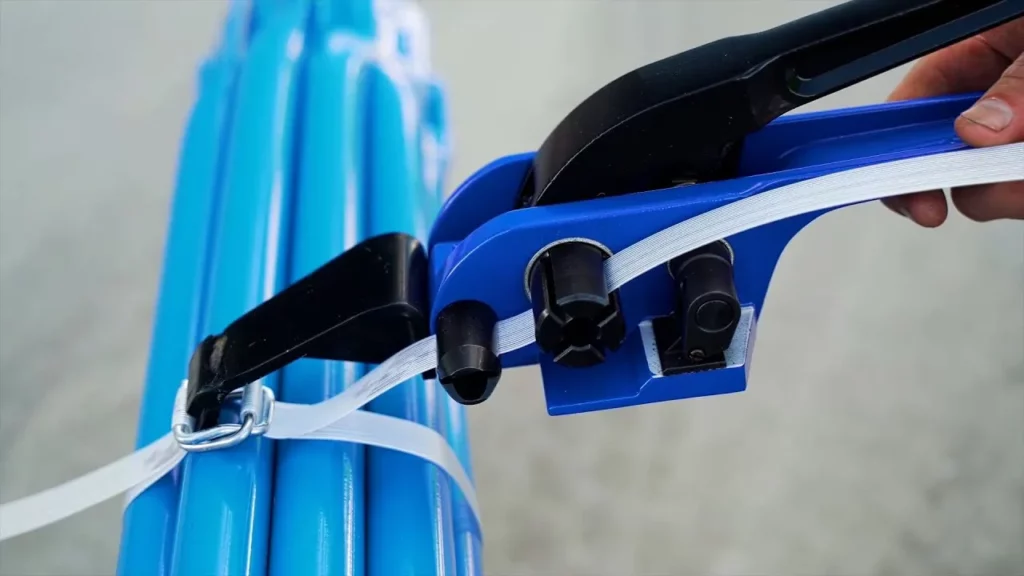
Manual strapping relies on handheld tools to secure goods using materials like plastic strapping, steel strapping, or composite strapping. While this approach may not suit high-volume operations, it offers unique benefits.
- Portability and Flexibility: The portability of manual tools means they can be easily moved around a warehouse or taken offsite to handle goods in various locations. If your packaging requirements vary across different areas, manual strapping is practical.
- Low-Volume Applications: Businesses dealing with a lower volume of packages may find manual strapping sufficient. In such cases, investing in an automated system might not yield significant returns.
- Cost-Effective: Manual strapping needs a lower initial investment than automated systems. It’s a budget-friendly option for small businesses or operations with limited capital, especially when paired with tools like handheld tensioners or battery strapping tensioners.
Learn more about how to use composite strapping in this video:
II. Automated Strapping
Automated strapping systems use advanced machinery to apply PET strapping, plastic strapping, or steel strapping efficiently and consistently. These systems are particularly advantageous for businesses with high-volume or specialised needs.
- Handling Heavy or Bulky Items: Strapping large or cumbersome items manually can be challenging and time-consuming. Automated solutions simplify the process, offering consistent tensioning and efficient handling of heavy goods.
- Enhanced Efficiency and Speed: Automated systems significantly boost packaging speed and efficiency for businesses managing large volumes of goods. They streamline operations, making them ideal for warehouses with fast-moving products.
- Consistent Results: Automated systems ensure precise and consistent strapping every time, eliminating human error. This consistency enhances customer satisfaction and reliability in supply chain processes.
- Labour Reduction: Businesses can reduce manual handling by automating the strapping process, freeing employees to focus on other critical tasks. It leads to increased productivity and lower labour costs.
- Enhanced Workplace Safety: Automated strapping systems minimise the risks associated with manual handling. Reduction in workplace injuries fosters a safer, more positive work environment and encourages employee retention.
- Long-Term Cost Savings: Although automated strapping systems involve higher initial investment, their ability to improve productivity and reduce labour costs often leads to long-term savings.
Choosing the Right Strapping Solution
Deciding between manual and automated strapping depends on your business’s specific needs. For instance, small-scale operations or mobile strapping requirements can benefit from using handheld tensioners (manual tools). High-volume or heavy-duty applications make a compelling case for automatic tensioners and fully automated systems.
Why Choose X-Pak Global?
No matter your packaging and restraint needs, X-Pak Global is your trusted partner for all strapping solutions. From manual strapping tools to advanced battery strapping tensioners and automated systems, we offer a wide range of products, including plastic strapping, steel strapping, composite strapping, and PET strapping.
Our expert team is here to guide you in selecting the best solution for your operations. Whether upgrading your current system or exploring new options, X-Pak Global ensures your goods are secured with precision and reliability. Contact us today to streamline your packaging process and increase your business efficiency!